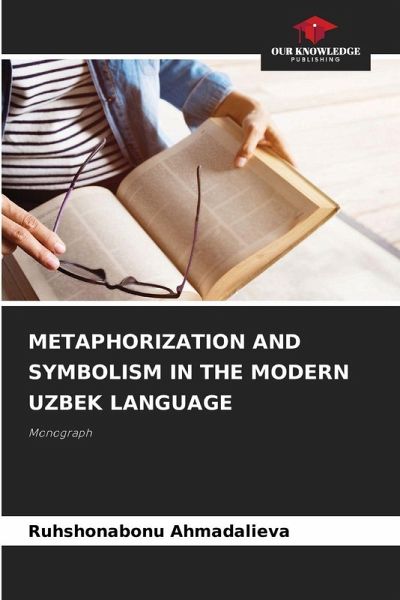
METAPHORIZATION AND SYMBOLISM IN THE MODERN UZBEK LANGUAGE
Monograph
Versandkostenfrei!
Versandfertig in 6-10 Tagen
29,99 €
inkl. MwSt.

PAYBACK Punkte
15 °P sammeln!

Language is not only a means of human communication but also a unique mirror reflecting a people's worldview, culture, and collective consciousness. Throughout human history, the linguistic system has developed in close connection with the social, cultural, and psychological changes occurring in the life of a nation. Among the most expressive and complex mechanisms of language, metaphor and symbol occupy a special place, connecting thought and reality and revealing how a person understands and interprets the world around them.In modern Uzbek linguistics, the study of metaphor and symbolism occ...
Language is not only a means of human communication but also a unique mirror reflecting a people's worldview, culture, and collective consciousness. Throughout human history, the linguistic system has developed in close connection with the social, cultural, and psychological changes occurring in the life of a nation. Among the most expressive and complex mechanisms of language, metaphor and symbol occupy a special place, connecting thought and reality and revealing how a person understands and interprets the world around them.In modern Uzbek linguistics, the study of metaphor and symbolism occupies an important place, driven by the active processes of globalization, the spread of digital forms of communication, and the expansion of intercultural contacts. These factors have accelerated the renewal of meanings, expanded semantic fields, and facilitated the emergence of new figurative associations that enrich speech in both everyday and artistic use. However, metaphor and symbol are not limited to an aesthetic function; they act as cognitive and cultural mechanisms that shape the perception, value systems, and identity of a linguistic community.
Andere Kunden interessierten sich für

![Cover A Modern Grammar of the English Language [microform]: Intended to Supply Deficiencies in Murray's Grammar, Containing Copious Exercises and Many New A](https://bilder.buecher.de/produkte/66/66146/66146871n.jpg "A Modern Grammar of the English Language [microform]: Intended to Supply Deficiencies in Murray's Grammar, Containing Copious Exercises and Many New A")