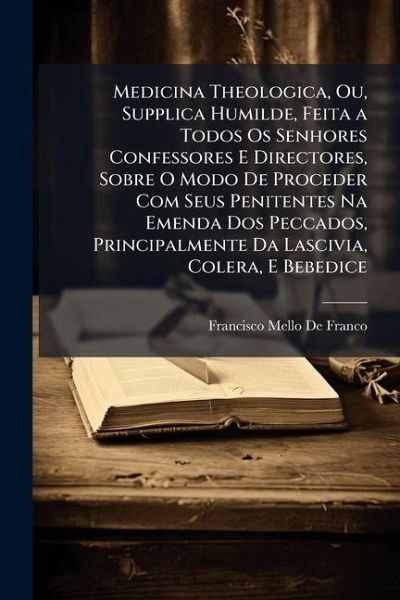
Medicina Theologica, Ou, Supplica Humilde, Feita a Todos Os Senhores Confessores E Directores, Sobre O Modo De Proceder Com Seus Penitentes Na Emenda Dos Peccados, Principalmente Da Lascivia, Colera, E Bebedice
Versandkostenfrei!
Versandfertig in über 4 Wochen
18,99 €
inkl. MwSt.

PAYBACK Punkte
9 °P sammeln!

Medicina Theologica, Ou, Supplica Humilde, Feita a Todos Os Senhores Confessores E Directores, Sobre O Modo De Proceder Com Seus Penitentes Na Emenda Dos Peccados, Principalmente Da Lascivia, Colera, E Bebedice, written by Francisco Mello De Franco and originally published in 1794, offers a theological approach to medicine and ethics within a Christian context. Primarily intended for confessors and spiritual directors, the text provides guidance on addressing penitents' sins, focusing particularly on lasciviousness, anger, and drunkenness. This historical work delves into the intersection of r...
Medicina Theologica, Ou, Supplica Humilde, Feita a Todos Os Senhores Confessores E Directores, Sobre O Modo De Proceder Com Seus Penitentes Na Emenda Dos Peccados, Principalmente Da Lascivia, Colera, E Bebedice, written by Francisco Mello De Franco and originally published in 1794, offers a theological approach to medicine and ethics within a Christian context. Primarily intended for confessors and spiritual directors, the text provides guidance on addressing penitents' sins, focusing particularly on lasciviousness, anger, and drunkenness. This historical work delves into the intersection of religious doctrine and practical approaches to moral correction, showcasing the theological considerations prevalent in medical and ethical thought of the time. It is a valuable resource for understanding the historical relationship between medicine, religion, and moral guidance. This work has been selected by scholars as being culturally important, and is part of the knowledge base of civilization as we know it. This work was reproduced from the original artifact, and remains as true to the original work as possible. Therefore, you will see the original copyright references, library stamps (as most of these works have been housed in our most important libraries around the world), and other notations in the work. This work is in the public domain in the United States of America, and possibly other nations. Within the United States, you may freely copy and distribute this work, as no entity (individual or corporate) has a copyright on the body of the work. As a reproduction of a historical artifact, this work may contain missing or blurred pages, poor pictures, errant marks, etc. Scholars believe, and we concur, that this work is important enough to be preserved, reproduced, and made generally available to the public. We appreciate your support of the preservation process, and thank you for being an important part of keeping this knowledge alive and relevant.
Andere Kunden interessierten sich für