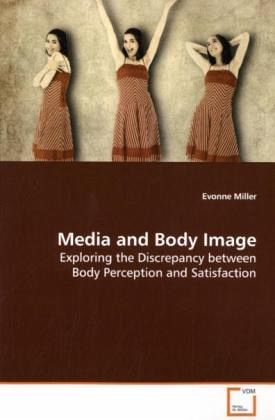
Media and Body Image
Exploring the Discrepancy between Body Perception and Satisfaction
Versandkostenfrei!
Versandfertig in 6-10 Tagen
39,99 €
inkl. MwSt.

PAYBACK Punkte
20 °P sammeln!

This research explores the relationships among media consumption, body satisfaction and perception. Correlational and experimental studies typically link exposure to the thin female body shape currently over-represented in the media with increased body dissatisfaction - contrary to this, however, my research demonstrates that women who view thin models perceive their bodies to be thinner (and closer to their ideal figure) than those who viewed control images. Yet, cognitive body dissatisfaction either did not change or increased. To explain this discrepancy, an anchoring explanation was postul...
This research explores the relationships among media
consumption, body satisfaction and perception.
Correlational and experimental studies typically
link exposure to the thin female body shape
currently over-represented in the media with
increased body dissatisfaction - contrary to this,
however, my research demonstrates that women who
view thin models perceive their bodies to be thinner
(and closer to their ideal figure) than those who
viewed control images. Yet, cognitive body
dissatisfaction either did not change or increased.
To explain this discrepancy, an anchoring
explanation was postulated whereby exposure to thin
women alters perceptions of their own weight, as
well as what weight is normal . My research
suggests that women s perception of, and
satisfaction with, their body vary depending on the
anchor provided by media images, their perceived
similarity to the image and their perception of
their relative body size.
consumption, body satisfaction and perception.
Correlational and experimental studies typically
link exposure to the thin female body shape
currently over-represented in the media with
increased body dissatisfaction - contrary to this,
however, my research demonstrates that women who
view thin models perceive their bodies to be thinner
(and closer to their ideal figure) than those who
viewed control images. Yet, cognitive body
dissatisfaction either did not change or increased.
To explain this discrepancy, an anchoring
explanation was postulated whereby exposure to thin
women alters perceptions of their own weight, as
well as what weight is normal . My research
suggests that women s perception of, and
satisfaction with, their body vary depending on the
anchor provided by media images, their perceived
similarity to the image and their perception of
their relative body size.
Andere Kunden interessierten sich für