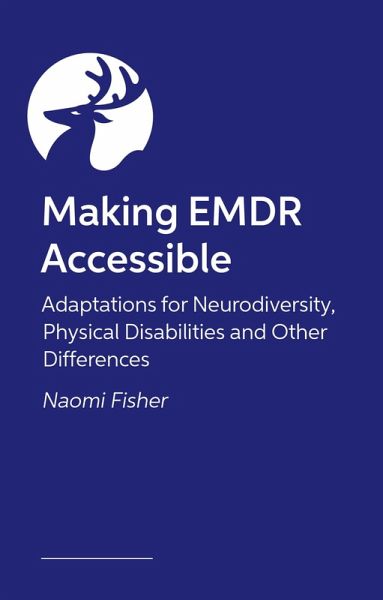
Making EMDR Accessible
Adaptations for Neurodiversity, Physical Disabilities and Other Differences
Versandkostenfrei!
Erscheint vorauss. 21. September 2026
29,99 €
inkl. MwSt.
Weitere Ausgaben:

Eye Movement Desensitization and Reprocessing (EMDR) is an effective trauma therapy that has the potential to be adapted for people with a range of diverse needs. It is both structured and client-centred, enabling each person to make sense of their experiences in a unique way. Making EMDR Accessible supports practitioners in recognising barriers and adapting their practice for neurodivergent clients or anyone who communicates or engages with therapy in different ways. Drawing on two decades of clinical experience, Naomi Fisher guides readers step-by-step through every phase of EMDR, highlighti...
Eye Movement Desensitization and Reprocessing (EMDR) is an effective trauma therapy that has the potential to be adapted for people with a range of diverse needs. It is both structured and client-centred, enabling each person to make sense of their experiences in a unique way. Making EMDR Accessible supports practitioners in recognising barriers and adapting their practice for neurodivergent clients or anyone who communicates or engages with therapy in different ways. Drawing on two decades of clinical experience, Naomi Fisher guides readers step-by-step through every phase of EMDR, highlighting where challenges commonly arise and offering practical and containing adaptations grounded in clinical formulation, current understanding of trauma, and research. With clear explanations and compelling case examples, she demonstrates how EMDR therapists can flex to meet a wide range of sensory needs, cognitive styles, and communication preferences. Clear, concise, and rooted in real-world practice, this book equips EMDR practitioners to deliver safer, more effective therapy to a wider range of clients.
Andere Kunden interessierten sich für