Lessons from the Fat Sphinx
Mário de Sá-Carneiro
Versandkostenfrei!
Versandfertig in 6-10 Tagen
58,99 €
inkl. MwSt.

PAYBACK Punkte
29 °P sammeln!

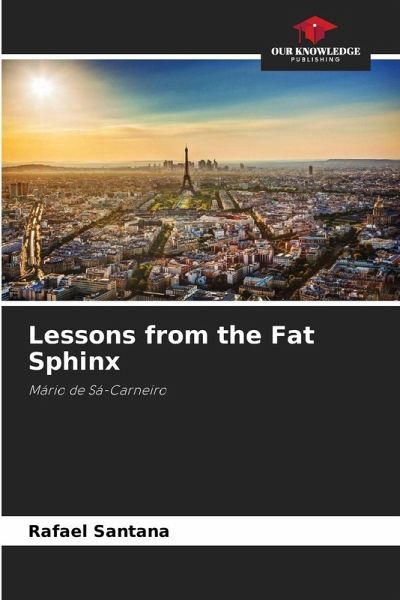
The aesthetic project of the Orpheu Generation sometimes tends to be more prominent in academic production than its political project. Fernando Pessoa and Mário de Sá-Carneiro both belong to a historical period that was keen to go against a certain nineteenth-century tradition that had placed its art at the service of the nation. Indeed, if the avant-garde rejects tradition in its desire to embrace the new, we must not forget that "the old" remains, albeit in echoes, fragments, and metamorphoses. Lições do Esfinge Gorda therefore focuses on the idea of a political project proposed by the O...
The aesthetic project of the Orpheu Generation sometimes tends to be more prominent in academic production than its political project. Fernando Pessoa and Mário de Sá-Carneiro both belong to a historical period that was keen to go against a certain nineteenth-century tradition that had placed its art at the service of the nation. Indeed, if the avant-garde rejects tradition in its desire to embrace the new, we must not forget that "the old" remains, albeit in echoes, fragments, and metamorphoses. Lições do Esfinge Gorda therefore focuses on the idea of a political project proposed by the Orpheu group; a project that does not exactly deny the educational imperatives of the previous generation, but rather rejects them, problematizes them, reconfigures them, inscribing itself as a kind of reverse pedagogy. Mário de Sá-Carneiro, by bringing up a series of taboo topics such as suicide, homoeroticism, and the femme fatale, contributed, in his own way, to the renewal of consciousness ina period of great artistic revolutions such as the beginning of the 20th century.
Andere Kunden interessierten sich für