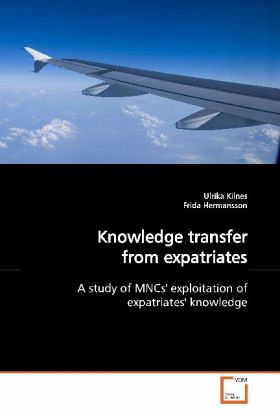
Knowledge transfer from expatriates
A study of MNCs' exploitation of expatriates' knowledge
Versandkostenfrei!
Versandfertig in 6-10 Tagen
32,99 €
inkl. MwSt.

PAYBACK Punkte
16 °P sammeln!

Globalization has had many effects on the world ofbusiness. One of these effects is an increase inemployees that are relocated on assignments abroad.An important issue of expatriate management is therepatriation of expatriates. This is a major butoften neglected issue. This study investigates howexpatriates experience that their knowledge gainedfrom international assignments is transferred andexploited by the MNC. The results from 93expatriates from eleven Large Cap companies suggestthat knowledge is not exploited trough formalmechanisms. Instead informal mechanisms of knowledgetransfer such a...
Globalization has had many effects on the world of
business. One of these effects is an increase in
employees that are relocated on assignments abroad.
An important issue of expatriate management is the
repatriation of expatriates. This is a major but
often neglected issue. This study investigates how
expatriates experience that their knowledge gained
from international assignments is transferred and
exploited by the MNC. The results from 93
expatriates from eleven Large Cap companies suggest
that knowledge is not exploited trough formal
mechanisms. Instead informal mechanisms of knowledge
transfer such as networks and own initiatives seem to
be a more common way of transferring and exploiting
knowledge in the investigated MNCs. The findings
indicate that the knowledge that the expatriates that
failed their mission abroad gained is not exploited
to the same extent as the expatriates that
successfully completed their assignments.
This analysis should be especially interesting for HR
managers and expatriates that wish to gain a deeper
understanding of knowledge transfer and learning
within MNCs.
business. One of these effects is an increase in
employees that are relocated on assignments abroad.
An important issue of expatriate management is the
repatriation of expatriates. This is a major but
often neglected issue. This study investigates how
expatriates experience that their knowledge gained
from international assignments is transferred and
exploited by the MNC. The results from 93
expatriates from eleven Large Cap companies suggest
that knowledge is not exploited trough formal
mechanisms. Instead informal mechanisms of knowledge
transfer such as networks and own initiatives seem to
be a more common way of transferring and exploiting
knowledge in the investigated MNCs. The findings
indicate that the knowledge that the expatriates that
failed their mission abroad gained is not exploited
to the same extent as the expatriates that
successfully completed their assignments.
This analysis should be especially interesting for HR
managers and expatriates that wish to gain a deeper
understanding of knowledge transfer and learning
within MNCs.
Andere Kunden interessierten sich für