Iron-Carbene Complexes

PAYBACK Punkte
39 °P sammeln!

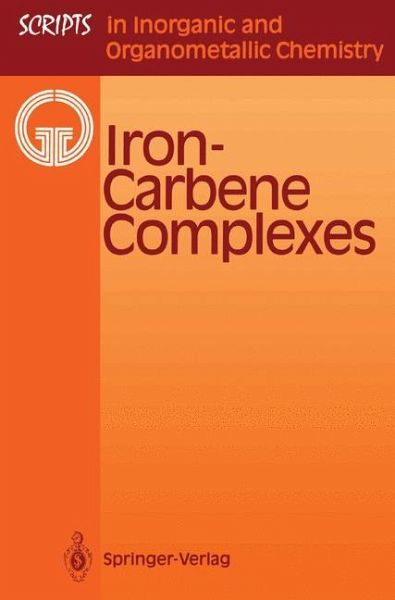
E.O. Fischer received the Nobel prize in 1973 for theinvestigations of complexes with a formal metal atom-carbondouble bond. Among these, the Iron-Carbene species isreadily available and has proved to be a versatile reagentin organic syntheses. It is rather simple to tune theelectronicproperties of this Fischer Carbene and to controlreactivity and stereospecificity of the reagent in, e.g.,cyclopropanation reactions.This first volume of the "Scripts in Inorganic and Organome-tallic Chemistry" addresses graduate students in the fieldsofcoordination compounds and organic synthesis. It coversthe c...
E.O. Fischer received the Nobel prize in 1973 for the
investigations of complexes with a formal metal atom-carbon
double bond. Among these, the Iron-Carbene species is
readily available and has proved to be a versatile reagent
in organic syntheses. It is rather simple to tune the
electronicproperties of this Fischer Carbene and to control
reactivity and stereospecificity of the reagent in, e.g.,
cyclopropanation reactions.
This first volume of the "Scripts in Inorganic and Organome-
tallic Chemistry" addresses graduate students in the fields
ofcoordination compounds and organic synthesis. It covers
the chemistry and structural aspects of iron-carbon com-
pounds with a iron-carbon double bond. The first part deals
with the carbene moiety, the second with vinylidene ligands.
investigations of complexes with a formal metal atom-carbon
double bond. Among these, the Iron-Carbene species is
readily available and has proved to be a versatile reagent
in organic syntheses. It is rather simple to tune the
electronicproperties of this Fischer Carbene and to control
reactivity and stereospecificity of the reagent in, e.g.,
cyclopropanation reactions.
This first volume of the "Scripts in Inorganic and Organome-
tallic Chemistry" addresses graduate students in the fields
ofcoordination compounds and organic synthesis. It covers
the chemistry and structural aspects of iron-carbon com-
pounds with a iron-carbon double bond. The first part deals
with the carbene moiety, the second with vinylidene ligands.
Andere Kunden interessierten sich für