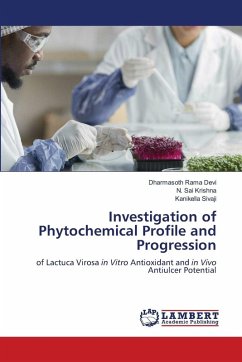
Investigation of Phytochemical Profile and Progression
of Lactuca Virosa in Vitro Antioxidant and in Vivo Antiulcer Potential
Versandkostenfrei!
Versandfertig in 6-10 Tagen
40,99 €
inkl. MwSt.

PAYBACK Punkte
20 °P sammeln!

The book examines the phytochemical composition and the possible antioxidant and antiulcer effects of Lactuca virosa using both in vitro and in vivo methodologies. Phytochemical analysis indicated the presence of various secondary metabolites, including flavonoids, alkaloids, tannins, and phenolic compounds, all of which are recognized for their health-promoting properties. Antioxidant tests, including DPPH and ABTS assays, showed significant free radical scavenging capabilities, suggesting the plant's potential to reduce oxidative stress. In vivo studies evaluated the antiulcer properties thr...
The book examines the phytochemical composition and the possible antioxidant and antiulcer effects of Lactuca virosa using both in vitro and in vivo methodologies. Phytochemical analysis indicated the presence of various secondary metabolites, including flavonoids, alkaloids, tannins, and phenolic compounds, all of which are recognized for their health-promoting properties. Antioxidant tests, including DPPH and ABTS assays, showed significant free radical scavenging capabilities, suggesting the plant's potential to reduce oxidative stress. In vivo studies evaluated the antiulcer properties through a gastric ulcer model induced by ethanol. Lactuca virosa showed a significant decrease in ulcer index and enhanced defensive factors of the mucosa, indicating its protective role on gastric lining. Histopathological evaluations further corroborated these results, showing fewer lesions and better tissue structure. The findings imply that Lactuca virosa has considerable antioxidant effects and can effectively address ulcerative issues, likely due to its rich array of phytochemicals.
Andere Kunden interessierten sich für