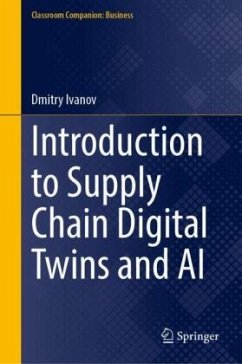
Introduction to Supply Chain Digital Twins and AI
Versandkostenfrei!
Erscheint vorauss. Juni 2026
65,99 €
inkl. MwSt.

This textbook offers an introduction to supply chain digital twins and AI in a concise but comprehensive form covering management, modeling and technology perspectives. It is designed as a supplementary satellite book for textbook Global Supply Chain and Operations Management advancing the topics of the digital supply chain. The book aims at delineating major design principles and technologies and explaining methodologies for supply chain analytics in digital twins. Throughout the book, numerous practical examples and short case-studies are provided to illustrate theoretical concepts. It also ...
This textbook offers an introduction to supply chain digital twins and AI in a concise but comprehensive form covering management, modeling and technology perspectives. It is designed as a supplementary satellite book for textbook Global Supply Chain and Operations Management advancing the topics of the digital supply chain. The book aims at delineating major design principles and technologies and explaining methodologies for supply chain analytics in digital twins. Throughout the book, numerous practical examples and short case-studies are provided to illustrate theoretical concepts. It also reviews and explains novel frameworks and concepts related to digital ecosystems and agentic AI.
The book provides a structured presentation and explanation of major concepts, methods, and digital technologies for building or improving supply chain digital twins in a simple and predictable format, making it accessible to students and professionals with backgrounds in management or engineering. Application scenarios are considered, such as using digital twins for stress testing of supply chain resilience as well as building digital twins in automotive industry.
Graduate and PhD students, as well as supply chain professionals, will benefit from the book s structured and didactically oriented presentation of the concepts, principles, and methods behind digital twins. By equipping readers with practical knowledge of contemporary theories and technologies, the book supports both academic learning and the development of digital supply chains in practice.
The book provides a structured presentation and explanation of major concepts, methods, and digital technologies for building or improving supply chain digital twins in a simple and predictable format, making it accessible to students and professionals with backgrounds in management or engineering. Application scenarios are considered, such as using digital twins for stress testing of supply chain resilience as well as building digital twins in automotive industry.
Graduate and PhD students, as well as supply chain professionals, will benefit from the book s structured and didactically oriented presentation of the concepts, principles, and methods behind digital twins. By equipping readers with practical knowledge of contemporary theories and technologies, the book supports both academic learning and the development of digital supply chains in practice.
Andere Kunden interessierten sich für