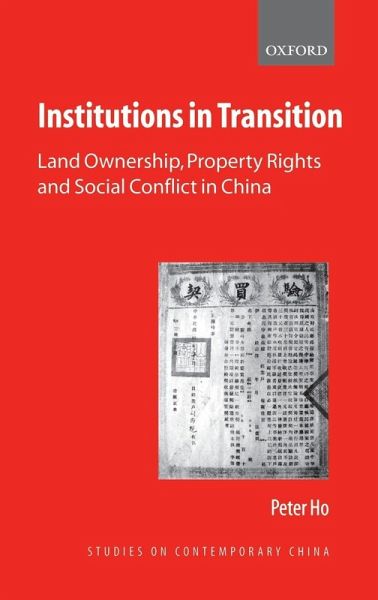
Institutions in Transition
Versandkostenfrei!
Versandfertig in 1-2 Wochen
155,99 €
inkl. MwSt.

PAYBACK Punkte
78 °P sammeln!

This book singles out land as an object of study and places it in the context of one of the world's largest and most populous countries undergoing institutional reform, the People's Republic of China. The book demonstrates that private property protected by law, the principle of "getting the prices right", and the emergence of effectively functioning markets are the outcome of a given society's historical development and institutional fabric. In other words, the successful creation of new institutions hinges in part on choice and timing in relation to the particular constellation of societal, economic, political and cultural parameters. Disregarding these might result in rising inequality, bad land stewardship, and the eruption of social conflict. This book addresses a wide readership of professionals interested in the economics of transition, rural development, legal anthropology, and natural resource management, and will be of interest to students of development studies and contemporary China.
China's urban sprawl has led to serious social cleavages. Unclear land and property rights have resulted in an uneasy alliance between real estate companies and local authorities, with most willing to strike illegal deals over land. The results have been devastating. Farmers live in fear that the land they till today will be gone tomorrow, while urban citizens are regularly evicted from their homes to make way for new skyscrapers and highways. These shocking incidents underscore the urgency of the land question in China. The recent conviction of the Chinese Minister for Land Resources and the forced evictions that have led to the injury and death of ordinary Chinese citizens highlight the case for land reform. Against this backdrop, many scholars criticize China's lack of privatization and titling of property. This monograph, however, demonstrates that these critically depend on timing and place. Land titling is imperative for the wealthier regions, yet, may prove detrimental in areas with high poverty. The book argues that China's land reform can only succeed if the clarification of property rights is done with caution and ample regard for regional variations.
Andere Kunden interessierten sich für