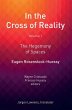

In the Cross of Reality
The Hegemony of Spaces
Versandkostenfrei!
Versandfertig in 6-10 Tagen
37,99 €
inkl. MwSt.
Weitere Ausgaben:

PAYBACK Punkte
19 °P sammeln!

This book makes the first volume of Eugen Rosenstock-Huessy's Soziologie available in English for the first time since its 1956 publication in German. Rosenstock-Huessy argues that social philosophy has favored abstract and spatially contrived categories of social organization over temporal processes. This preference for space-thinking has diverted us from recognizing the power of speech and its relationship to living on the front lines of life.Taking speech and the social responsibilities and reciprocities that accompany naming as the key to social reality, In the Cross of Reality provides a ...
This book makes the first volume of Eugen Rosenstock-Huessy's Soziologie available in English for the first time since its 1956 publication in German. Rosenstock-Huessy argues that social philosophy has favored abstract and spatially contrived categories of social organization over temporal processes. This preference for space-thinking has diverted us from recognizing the power of speech and its relationship to living on the front lines of life.
Taking speech and the social responsibilities and reciprocities that accompany naming as the key to social reality, In the Cross of Reality provides a sociological exploration of "play" spaces as the basis for reflexivity. It also explores the spaces of activity and their correlation in war and peace to the spheres of "serious life." If we are to survive and flourish, different qualities and reciprocal relationships must be cultivated so that we can deal with different fronts of life. Arguing that modern intellectuals and theirobsession with space have created a dangerously false choice between mechanical and aesthetic salvation, Rosenstock-Huessy clears a path so that we better appreciate our relationship between past and future in founding and in partitioning time.
Taking speech and the social responsibilities and reciprocities that accompany naming as the key to social reality, In the Cross of Reality provides a sociological exploration of "play" spaces as the basis for reflexivity. It also explores the spaces of activity and their correlation in war and peace to the spheres of "serious life." If we are to survive and flourish, different qualities and reciprocal relationships must be cultivated so that we can deal with different fronts of life. Arguing that modern intellectuals and theirobsession with space have created a dangerously false choice between mechanical and aesthetic salvation, Rosenstock-Huessy clears a path so that we better appreciate our relationship between past and future in founding and in partitioning time.
Andere Kunden interessierten sich für