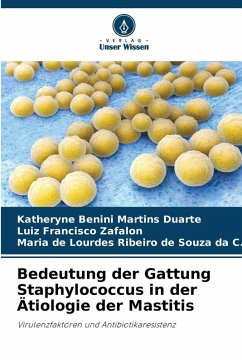
Importance of the Staphylococcus genus in the etiology of mastitis
Virulence factors and antimicrobial resistance
Versandkostenfrei!
Versandfertig in 6-10 Tagen
27,99 €
inkl. MwSt.

PAYBACK Punkte
14 °P sammeln!

Mastitis is a disease that causes inflammation in the mammary gland and is usually infectious in origin. It is the main disease affecting dairy herds, causing economic losses due to quantitative and qualitative changes in milk, difficulties in treating animals, and premature culling of sick animals. In infectious mastitis, bacteria stand out as the most commonly found microorganisms, with bacteria of the genus Staphylococcus being the main cause of mastitis in dairy herds. These microorganisms are characterized by their ability to produce a wide variety of extracellular toxins and other virule...
Mastitis is a disease that causes inflammation in the mammary gland and is usually infectious in origin. It is the main disease affecting dairy herds, causing economic losses due to quantitative and qualitative changes in milk, difficulties in treating animals, and premature culling of sick animals. In infectious mastitis, bacteria stand out as the most commonly found microorganisms, with bacteria of the genus Staphylococcus being the main cause of mastitis in dairy herds. These microorganisms are characterized by their ability to produce a wide variety of extracellular toxins and other virulence factors such as biofilm formation, in addition to their resistance to the antimicrobial agents used in the treatment of animals. Mastitis is also a public health problem, as staphylococcal enterotoxins are responsible for food poisoning and can be transmitted through milk even after heat treatment. Thus, this review aimed to address aspects of the virulence and resistance of staphylococci isolated in infectious mastitis in dairy herds.
Andere Kunden interessierten sich für