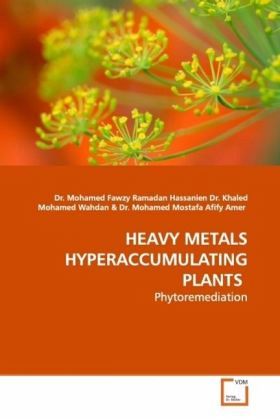
HEAVY METALS HYPERACCUMULATING PLANTS
Phytoremediation
Versandkostenfrei!
Versandfertig in 6-10 Tagen
45,99 €
inkl. MwSt.

PAYBACK Punkte
23 °P sammeln!

Heavy metals may have deleterious effects on soilmicroorganisms and plants. Excess of zinc, cadmiumand lead in soils have been linked to human healtheffects, animal fatalities and the disruption ofnatural ecosystems. At present, the most common cleanup technology consists of removing contaminated soil,transporting, the soil to landfills and replacing thesoil with clean topsoil. This clean up technique doesnot solve the problem; it only transfers problem soilfrom one area to another in a relatively costly andcumbersome way. Hence, the use of highly specializedplants, which are able to accumulat...
Heavy metals may have deleterious effects on soil
microorganisms and plants. Excess of zinc, cadmium
and lead in soils have been linked to human health
effects, animal fatalities and the disruption of
natural ecosystems. At present, the most common clean
up technology consists of removing contaminated soil,
transporting, the soil to landfills and replacing the
soil with clean topsoil. This clean up technique does
not solve the problem; it only transfers problem soil
from one area to another in a relatively costly and
cumbersome way. Hence, the use of highly specialized
plants, which are able to accumulate high
concentrations of heavy metals in harvestable shoot
tissue, termed phytoremediation involves successive
cropping of these plants on contaminated sites. This
monograph is focus on phytoremediation as a novel
strategy for the removal of toxic metals from the
environment using plants.
microorganisms and plants. Excess of zinc, cadmium
and lead in soils have been linked to human health
effects, animal fatalities and the disruption of
natural ecosystems. At present, the most common clean
up technology consists of removing contaminated soil,
transporting, the soil to landfills and replacing the
soil with clean topsoil. This clean up technique does
not solve the problem; it only transfers problem soil
from one area to another in a relatively costly and
cumbersome way. Hence, the use of highly specialized
plants, which are able to accumulate high
concentrations of heavy metals in harvestable shoot
tissue, termed phytoremediation involves successive
cropping of these plants on contaminated sites. This
monograph is focus on phytoremediation as a novel
strategy for the removal of toxic metals from the
environment using plants.
Andere Kunden interessierten sich für