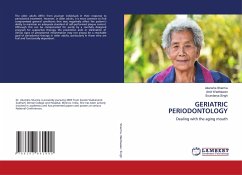
GERIATRIC PERIODONTOLOGY
Dealing with the aging mouth
Versandkostenfrei!
Versandfertig in 6-10 Tagen
41,99 €
inkl. MwSt.

PAYBACK Punkte
21 °P sammeln!

The older adults differ from younger individuals in their response to periodontal treatment. However, in older adults, it is more common to find compromised general conditions that may negatively affect the patient's ability to maintain an adequate standard of self-performed plaque control. Although this can be compensated for partly by a carefully designed program for supportive therapy, the prevention and/ or elimination of clinical signs of periodontal inflammation may not always be a reachable goal of periodontal therapy in older adults, particularly in those who are frail and functionally...
The older adults differ from younger individuals in their response to periodontal treatment. However, in older adults, it is more common to find compromised general conditions that may negatively affect the patient's ability to maintain an adequate standard of self-performed plaque control. Although this can be compensated for partly by a carefully designed program for supportive therapy, the prevention and/ or elimination of clinical signs of periodontal inflammation may not always be a reachable goal of periodontal therapy in older adults, particularly in those who are frail and functionally dependent.
The older adults differ from younger individuals in their response to periodontal treatment. However, in older adults, it is more common to find compromised general conditions that may negatively affect the patient's ability to maintain an adequate standard of self-performed plaque control. Although this can be compensated for partly by a carefully designed program for supportive therapy, the prevention and/ or elimination of clinical signs of periodontal inflammation may not always be a reachable goal of periodontal therapy in older adults, particularly in those who are frail and functionally dependent.
The older adults differ from younger individuals in their response to periodontal treatment. However, in older adults, it is more common to find compromised general conditions that may negatively affect the patient's ability to maintain an adequate standard of self-performed plaque control. Although this can be compensated for partly by a carefully designed program for supportive therapy, the prevention and/ or elimination of clinical signs of periodontal inflammation may not always be a reachable goal of periodontal therapy in older adults, particularly in those who are frail and functionally dependent.
Andere Kunden interessierten sich für