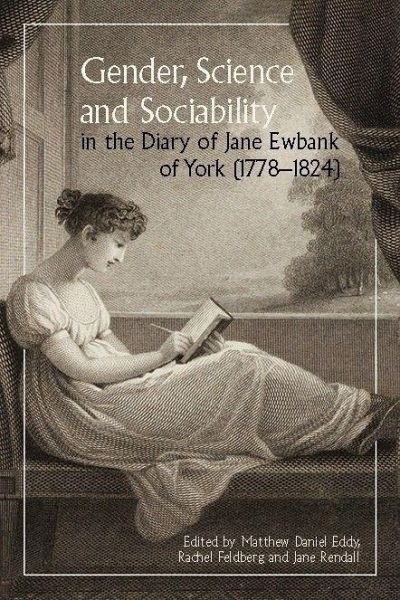
Gender, Science and Sociability in the Diary of Jane Ewbank of York (1778-1824)
Versandkostenfrei!
Erscheint vorauss. 7. April 2026
126,99 €
inkl. MwSt.

Examines the newly-discovered diary of Jane Ewbank as a vital site of knowledge-making, illuminating women's intellectual lives in Enlightenment York, where science, cultural criticism and sociability intersected. Amid the vibrant intellectual culture of the 'transpennine Enlightenment', Jane Ewbank's diary, written between 1803 and 1805, offers a rare, richly textured account of a provincial woman's engagement with science, cultural criticism, and sociability in York and beyond. This interdisciplinary volume includes an annotated transcription of Ewbank's 34,000-word diary alongside essays si...
Examines the newly-discovered diary of Jane Ewbank as a vital site of knowledge-making, illuminating women's intellectual lives in Enlightenment York, where science, cultural criticism and sociability intersected. Amid the vibrant intellectual culture of the 'transpennine Enlightenment', Jane Ewbank's diary, written between 1803 and 1805, offers a rare, richly textured account of a provincial woman's engagement with science, cultural criticism, and sociability in York and beyond. This interdisciplinary volume includes an annotated transcription of Ewbank's 34,000-word diary alongside essays situating it within the gendered knowledge networks of northern England. Exploring her participation in scientific lectures, women's writing and the arts in York, contributors interrogate the diary as a media technology, a cognitive tool, and an emotionally informed thinking device. Ewbank's encounters with figures such as the novelist and educationalist Maria Edgeworth, the scientific lecturer Henry Moyes and the philanthropist Catherine Cappe are highlighted throughout, and emphasise the intersection of topics ranging from natural theology and scientific education to literature, theatre and music. The essays variously engage with historiographies of early modern life-writing, Enlightenment sociability, and the emotional economies of medicine, while offering reflections that challenge colonial silences and foreground global entanglements. Drawing on recent work in history of science, literature, and feminist theory, this volume redefines the diary as a critical artefact of Enlightenment culture and offers a compelling model for studying gendered intellectual life in regional contexts.
Andere Kunden interessierten sich für