
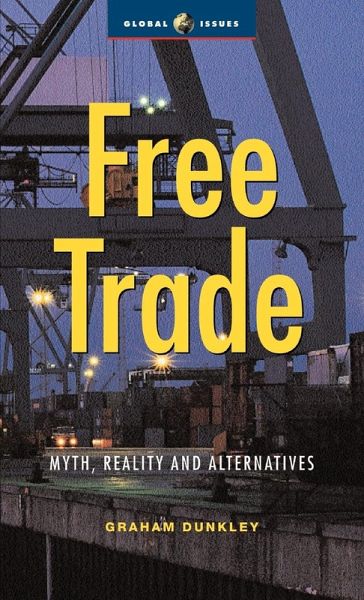
Free Trade
Myths, Realities and Alternatives
Versandkostenfrei!
Versandfertig in 1-2 Wochen
104,99 €
inkl. MwSt.
Weitere Ausgaben:

PAYBACK Punkte
52 °P sammeln!

Free trade and its virtues are a mantra of contemporary economics, and a fixed point of policy for the World Trade Organization. But there are many economists who disagree, and there are many ideas for alternative ways of organizing world trade and increasing the development chances for poor countries. Little wonder that trade has moved beyond the realms of intellectual dispute, and become a leading campaigning issue for social movements and development NGOs. Free Trade explains the case for free trade; the critiques; and how free trade policies work in practice. It introduces powerful and increasingly high profile new ideas for greater self-reliance and alternative development. Readers can see how it is possible to create economic policies that really address poverty and inequality, and that also take into account the environment, culture and human rights.
In this book Australian economist, Graham Dunkley, explains and critiques the crucial concept of free trade. A policy of free trade is central to today's world-dominating globalization project. The more euphoric globalists uncritically assume that it has universal and unequivocal benefits for all people and countries. And the perpetual negotiations of the World Trade Organization are wholly based on this presumption. Graham Dunkley shows, however, that leading economists have always been more sceptical about free trade doctrine than the dogmatic globalizers realize. There are more holes in free trade theory than its advocates grasp. And the benefits of free trade in practice are more limited and contingent than they acknowledge. He also argues that the World Bank's long-time push for export-led development is misguided. A more democratic world trading order is necessary and possible. And more interventionist, self-reliant trade policies are feasible, especially if a more holistic view of economic development goals is adopted.
Andere Kunden interessierten sich für