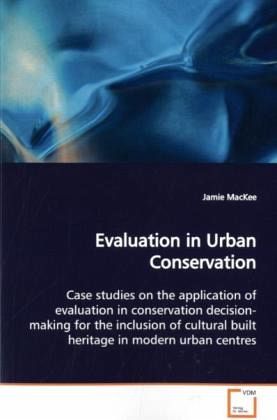
Evaluation in Urban Conservation
Case studies on the application of evaluation in conservation decision-making for the inclusion of cultural built heritage in modern urban centres
Versandkostenfrei!
Versandfertig in 6-10 Tagen
58,11 €
inkl. MwSt.

PAYBACK Punkte
29 °P sammeln!

Findings from this book indicate that there is arole for an evaluation methodology in cultural builtheritage (CBH) conservation decision-making for thepublic and private sectors. In this book CommunityImpact Evaluation (CIE) has been selected as itprovides for the accounting of tangible andintangible attributes unique to CBH, often notequitably accounted. The method also allows theidentification of conflicts providing the frameworkfor resolution. It is recommended that governmentagencies and private developers, for cases involvingprotection of the CBH could adopt a CIE. In caseswhere governmen...
Findings from this book indicate that there is a
role for an evaluation methodology in cultural built
heritage (CBH) conservation decision-making for the
public and private sectors. In this book Community
Impact Evaluation (CIE) has been selected as it
provides for the accounting of tangible and
intangible attributes unique to CBH, often not
equitably accounted. The method also allows the
identification of conflicts providing the framework
for resolution. It is recommended that government
agencies and private developers, for cases involving
protection of the CBH could adopt a CIE. In cases
where government heritage agencies considered that a
development might compromise conservation, a CIE
could be undertaken to identify alternative courses
of action. The project proponent, in the case of a
private development, could undertake the CIE. The
results of these could be used to assist in
developing appropriate avenues for the implementation
of the development. To simplify the CIE process the
use of scoping, used in Environmental Assessment, has
been recommended. This would allow for consideration
of only the significant impacts upon the community
sectors.
role for an evaluation methodology in cultural built
heritage (CBH) conservation decision-making for the
public and private sectors. In this book Community
Impact Evaluation (CIE) has been selected as it
provides for the accounting of tangible and
intangible attributes unique to CBH, often not
equitably accounted. The method also allows the
identification of conflicts providing the framework
for resolution. It is recommended that government
agencies and private developers, for cases involving
protection of the CBH could adopt a CIE. In cases
where government heritage agencies considered that a
development might compromise conservation, a CIE
could be undertaken to identify alternative courses
of action. The project proponent, in the case of a
private development, could undertake the CIE. The
results of these could be used to assist in
developing appropriate avenues for the implementation
of the development. To simplify the CIE process the
use of scoping, used in Environmental Assessment, has
been recommended. This would allow for consideration
of only the significant impacts upon the community
sectors.
Andere Kunden interessierten sich für