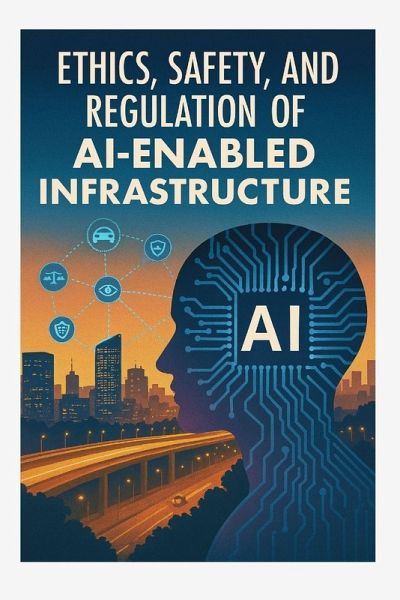
Ethics, Safety, and Regulation of AI-Enabled Infrastructure
Versandkostenfrei!
Versandfertig in 1-2 Wochen
27,99 €
inkl. MwSt.

PAYBACK Punkte
14 °P sammeln!

This book offers a comprehensive exploration of the ethical, safety, and regulatory challenges posed by the integration of artificial intelligence (AI) into critical infrastructure. It begins by defining AI-enabled infrastructure as systems where AI is not a peripheral add-on but a core component responsible for decision-making, optimization, and adaptation. Through examples like smart grids, autonomous transportation, predictive maintenance, and public safety platforms, the book illustrates how AI transforms traditional engineering paradigms, introducing complexity, probabilistic reasoning, a...
This book offers a comprehensive exploration of the ethical, safety, and regulatory challenges posed by the integration of artificial intelligence (AI) into critical infrastructure. It begins by defining AI-enabled infrastructure as systems where AI is not a peripheral add-on but a core component responsible for decision-making, optimization, and adaptation. Through examples like smart grids, autonomous transportation, predictive maintenance, and public safety platforms, the book illustrates how AI transforms traditional engineering paradigms, introducing complexity, probabilistic reasoning, and emergent behaviors. A central theme is the shift from deterministic, rule-based systems to adaptive, data-driven ones, which brings both amplified benefits and new risks. The book details the unique failure modes of AI-such as adversarial attacks, data drift, opacity, and emergent unintended behaviors-and argues that traditional safety engineering is insufficient for these challenges. It advocates for new frameworks that incorporate robustness testing, explainability, bias mitigation, continuous monitoring, and human oversight. Ethical considerations are woven throughout, emphasizing principles like beneficence, non-maleficence, justice, and autonomy. The book discusses the importance of stakeholder engagement, transparency, and participatory design to ensure that AI-infused infrastructure serves the public good and avoids reinforcing societal inequities. Regulatory and policy landscapes are examined, highlighting the evolving nature of standards, compliance, and international cooperation. The book stresses the need for agile, adaptive governance that can keep pace with technological change, and for clear accountability mechanisms when AI systems cause harm. Practical guidance is provided for implementing robust data governance, privacy engineering, fairness audits, and incident response. The book concludes by synthesizing these elements into an integrated governance framework, illustrated through case studies like AI-powered subway control systems, and calls for continuous improvement, cross-functional collaboration, and a culture of responsible innovation to ensure that AI-enabled infrastructure is safe, equitable, and trustworthy.
Andere Kunden interessierten sich für