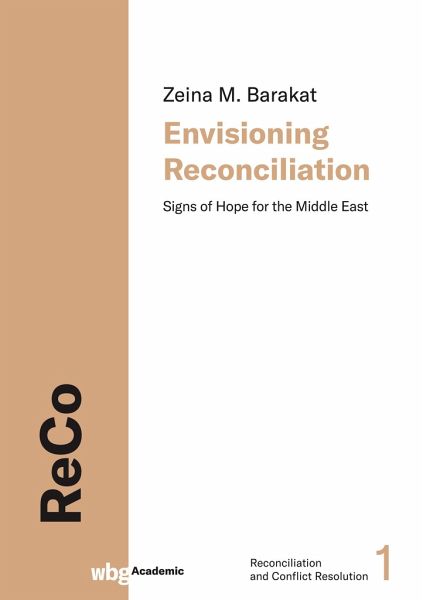
Envisioning Reconciliation
Signs of Hope for the Middle East
Versandkostenfrei!
Versandfertig in 6-10 Tagen
38,00 €
inkl. MwSt.

PAYBACK Punkte
0 °P sammeln!

While political reconciliation is often understood as promoting peace and harmony in post-conflict situations, Barakat explores reconciliation amid crisis and conflict with a particular focus on Israel and Palestine. Various pre-conditions for reconciliation are addressed (truth, justice, trust), and barriers hindering reconciliation's prospects in conflicts are diagnosed (denial, dehuminazation, non-recognition). Perceptions of the past and aspirations for the future are formulated such as apology, forgiveness and empathetic dialogue. Political reconciliation processes are profound and long-t...
While political reconciliation is often understood as promoting peace and harmony in post-conflict situations, Barakat explores reconciliation amid crisis and conflict with a particular focus on Israel and Palestine. Various pre-conditions for reconciliation are addressed (truth, justice, trust), and barriers hindering reconciliation's prospects in conflicts are diagnosed (denial, dehuminazation, non-recognition). Perceptions of the past and aspirations for the future are formulated such as apology, forgiveness and empathetic dialogue. Political reconciliation processes are profound and long-term; they demand changes in basic aspirations, emotions, and feelings among those involved in conflict. Barakat concludes that promoting reconciliation requires both a top down and bottom up approach. In this lessons from South Africa can be learnt. Leading figures like Nelson Mandela are models in promoting a shift in the psychosocial thinking conducive to social conflict transformation.
Andere Kunden interessierten sich für