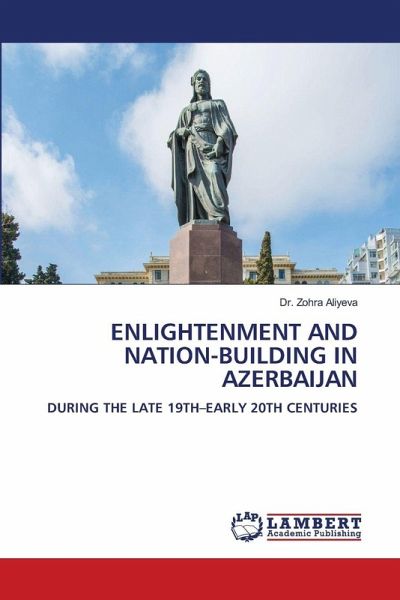
ENLIGHTENMENT AND NATION-BUILDING IN AZERBAIJAN
DURING THE LATE 19TH-EARLY 20TH CENTURIES
Versandkostenfrei!
Versandfertig in 6-10 Tagen
29,99 €
inkl. MwSt.

PAYBACK Punkte
15 °P sammeln!

This book examines the profound impact of European, particularly French, Enlightenment thought on the Azerbaijani intellectual landscape in the late 19th and early 20th centuries. It explores how the ideas of prominent Azerbaijani reformers and polymaths-such as Abbasgulu Bakikhanov, Mirza Fatali Akhundzade (the "Azerbaijani Molière"), Hasan bey Zardabi, Seyid Azim Shirvani, and Najaf bey Vezirov-transformed local cultural, educational, and political life.The study highlights how these thinkers adapted rationalist, humanist, and emancipatory ideals to the Azerbaijani context, fostering the de...
This book examines the profound impact of European, particularly French, Enlightenment thought on the Azerbaijani intellectual landscape in the late 19th and early 20th centuries. It explores how the ideas of prominent Azerbaijani reformers and polymaths-such as Abbasgulu Bakikhanov, Mirza Fatali Akhundzade (the "Azerbaijani Molière"), Hasan bey Zardabi, Seyid Azim Shirvani, and Najaf bey Vezirov-transformed local cultural, educational, and political life.The study highlights how these thinkers adapted rationalist, humanist, and emancipatory ideals to the Azerbaijani context, fostering the development of a national literature, critical press, and a vision of a democratic and secular society. This intellectual awakening culminated in the creation of the Azerbaijan Democratic Republic on May 28, 1918, the first democratic republic in the Muslim East. Far from being a mere product of political upheaval, the ADR represented the realization of decades of reformist thought, blending European influences with local traditions to forge a modern nation-state.
Andere Kunden interessierten sich für