
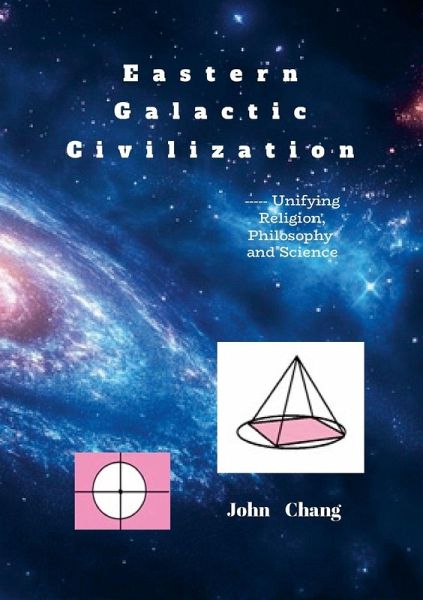
Eastern Galactic Civilization
----- Unifying Religion, Philosophy and Science
Versandkostenfrei!
Versandfertig in 1-2 Wochen
33,99 €
inkl. MwSt.

PAYBACK Punkte
17 °P sammeln!

Chinese divine culture, the laws of the universe; break through the Stellar system, Galactic civilization. No need to go into the mountains, no need to believe in religion; have the opportunity to read this book, the epiphany of the grand road. Pyramid faith, Egypt and Maya; Australian red monoliths, brilliant light. Freedom and democracy, the constitutions of Europe and America; the future of the world, hopefully greater. In ancient times, there were three most famous Chinese cultural classics: discussions on unification, systems, and prophecies. They are: 1)¿I Ching¿( Book of Changes ), ed...
Chinese divine culture, the laws of the universe; break through the Stellar system, Galactic civilization. No need to go into the mountains, no need to believe in religion; have the opportunity to read this book, the epiphany of the grand road. Pyramid faith, Egypt and Maya; Australian red monoliths, brilliant light. Freedom and democracy, the constitutions of Europe and America; the future of the world, hopefully greater. In ancient times, there were three most famous Chinese cultural classics: discussions on unification, systems, and prophecies. They are: 1)¿I Ching¿( Book of Changes ), edited and perfected by King Wen of the Zhou Dynasty. ( Exploration of Eastern Religions ) 2)¿Tao Te Ching¿, written by the scholar Laozi during the Spring and Autumn and Warring States periods. ( Exploration of Eastern Philosophy ). 3)¿Tui Bei Tü, written by the Tang Dynasty ministers Yuan Tiangang and Li Chunfeng. ( Science of mind discussion in the East ) As a more in-depth comparison, analysis, summary, and expansion of the above three books, this book collects, organizes, and edits a large number of articles from past years. It is a summary of all thought works, showcasing the beginnings of Eastern innovative thinking, new culture, new civilization, and a new renaissance. It continues the concept of the unification of Chinese civilization, unifying religious beliefs, philosophical ideas, and scientific culture.
Andere Kunden interessierten sich für