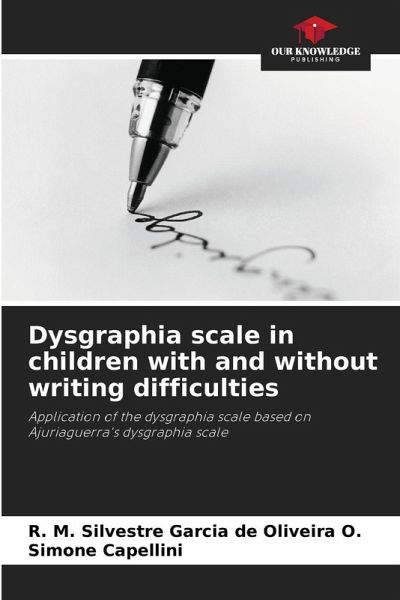
Dysgraphia scale in children with and without writing difficulties
Application of the dysgraphia scale based on Ajuriaguerra's dysgraphia scale
Versandkostenfrei!
Versandfertig in 6-10 Tagen
36,99 €
inkl. MwSt.

PAYBACK Punkte
18 °P sammeln!

Writing involves a motor activity of graphic representation of the structure of language and is therefore considered a praxic activity. Our culture is very rich in drawn or written signs. From their first contact with the outside world, children are asked to interact with the signs that this culture offers them, coming into continuous contact with the stimuli that come from this literate culture. The child's graphic evolution is the result of a natural, expressive, representative tendency that reveals their particular world, where social interaction has a decisive weight. Therefore, writing le...
Writing involves a motor activity of graphic representation of the structure of language and is therefore considered a praxic activity. Our culture is very rich in drawn or written signs. From their first contact with the outside world, children are asked to interact with the signs that this culture offers them, coming into continuous contact with the stimuli that come from this literate culture. The child's graphic evolution is the result of a natural, expressive, representative tendency that reveals their particular world, where social interaction has a decisive weight. Therefore, writing legibly has become an indispensable skill for individuals to adapt and integrate into their social environment. It is not uncommon to find children whose inability to write, with poor handwriting, with difficulty in drawing straight lines, has no neurological damage, psychological deviations, or intellectual disabilities. The application of the Dysgraphia Scale allows for the detection of irregular handwriting.
Andere Kunden interessierten sich für