Duke Alexander and his Sarcophagi
The 10th Duke of Hamilton and the Egyptian stone anthropoid sarcophagi of Pabasa and Irtyeru
Versandkostenfrei!
Versandfertig in 1-2 Wochen
75,99 €
inkl. MwSt.

PAYBACK Punkte
38 °P sammeln!

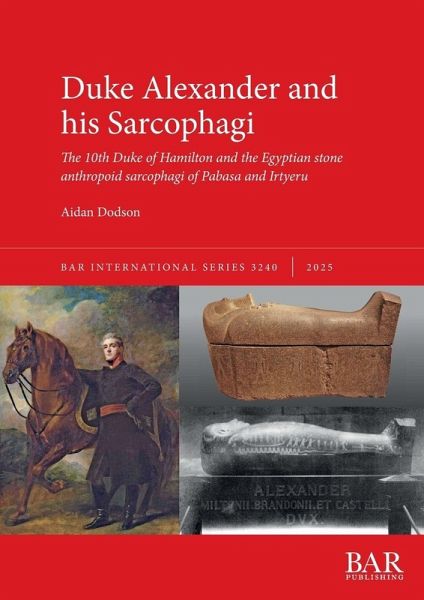
Alexander Hamilton, 10th Duke of Hamilton (1767-1852), was one of the great collectors of his day. Among his possessions were two Egyptian anthropoid stone sarcophagi. One belonged to Pabasa, a high official of the late 7th century BC, the other to a 3rd/2nd century woman named Irtyeru. The sarcophagus of Pabasa is now in a Glasgow museum, but that of Irtyeru now lies under the soil of a Scottish cemetery - containing the mummified body of Duke Alexander himself. This book relates how the two pieces came to be in the duke's possession, and publishes them archaeologically and philologically for...
Alexander Hamilton, 10th Duke of Hamilton (1767-1852), was one of the great collectors of his day. Among his possessions were two Egyptian anthropoid stone sarcophagi. One belonged to Pabasa, a high official of the late 7th century BC, the other to a 3rd/2nd century woman named Irtyeru. The sarcophagus of Pabasa is now in a Glasgow museum, but that of Irtyeru now lies under the soil of a Scottish cemetery - containing the mummified body of Duke Alexander himself. This book relates how the two pieces came to be in the duke's possession, and publishes them archaeologically and philologically for the first time. Additionally, it explores the history of the great mausoleum that Duke Alexander constructed for himself, his ancestors and his successors. It concludes with the sad tale of the undermining of the mausoleum and the adjacent Hamilton Palace in search of coal and the consequent utter ruin of Duke Alexander's grand design.
Andere Kunden interessierten sich für