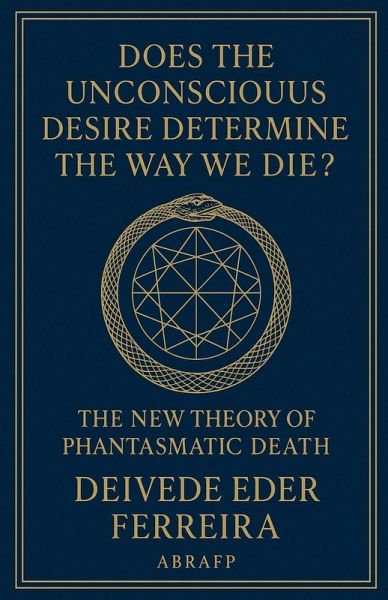
Does the Unconscious Desire Determine the Way We Die?
The New Theory of Phantasmatic Death
Versandkostenfrei!
Versandfertig in 1-2 Wochen
21,99 €
inkl. MwSt.

PAYBACK Punkte
11 °P sammeln!

Does the unconscious influence the way we die? This groundbreaking work introduces a contemporary psychoanalytic theory that reopens one of the most silent and decisive questions in clinical practice: the psychic structure through which each subject approaches death. In The New Theory of Phantasmatic Death, psychoanalyst Deivede Eder Ferreira proposes that the unconscious does not determine the moment of death, but it may shape the symbolic form through which a person moves toward it. Ferreira argues that every subject carries an aesthetic signature of death, formed by early fantasies, emotion...
Does the unconscious influence the way we die? This groundbreaking work introduces a contemporary psychoanalytic theory that reopens one of the most silent and decisive questions in clinical practice: the psychic structure through which each subject approaches death. In The New Theory of Phantasmatic Death, psychoanalyst Deivede Eder Ferreira proposes that the unconscious does not determine the moment of death, but it may shape the symbolic form through which a person moves toward it. Ferreira argues that every subject carries an aesthetic signature of death, formed by early fantasies, emotional wounds, unconscious repetitions, and the unique way each individual negotiates visibility, disappearance, and recognition in the gaze of the Other. Some people are drawn to vanish without leaving a trace. Others unconsciously construct a dramatic final scene. Some imagine being mourned or idealized. Others prefer to escape before being seen too closely. Through clinical reflections, cultural myths, and the symbolic figure of the Ouroboros, this book reveals the deep structures shaping the subject's relationship with danger, risk, disappearance, and the Real. This work also offers concrete benefits for contemporary clinical practice. Ferreira presents a new axis of listening, refining how analysts and therapists identify unconscious patterns related to repetition, risk, symbolic disappearance, and indirect self-harm. The book enhances the technique of floating attention and restores death to its central place in the structure of desire, offering a renewed lens for working with complex cases such as borderline functioning, compulsions, destructive relational cycles, psychosomatic collapse, and death-driven symptoms. Philosophical, rigorous, and clinically grounded, The New Theory of Phantasmatic Death expands the possibilities of psychoanalytic interpretation and deepens the understanding of desire, mortality, and the symbolic architecture of the human end.
Andere Kunden interessierten sich für