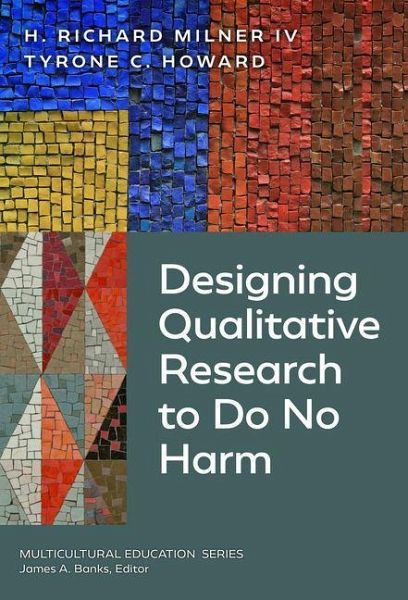
Designing Qualitative Research to Do No Harm
Versandkostenfrei!
Erscheint vorauss. 24. April 2026
44,99 €
inkl. MwSt.
Weitere Ausgaben:

This book is for everyone who cares about how people, communities, and institutions are treated through research processes, and what we learn from research that impacts them. This accessible book helps researchers avoid unintentional harm to research participants, communities, institutions, and organizations. The book assists researchers in building knowledge, attitudes, dispositions, skills, and practices to co-construct knowledge with people and communities to inform policies and practices. Grounded in research and theory, the book focuses on three essential qualitative research methods: int...
This book is for everyone who cares about how people, communities, and institutions are treated through research processes, and what we learn from research that impacts them. This accessible book helps researchers avoid unintentional harm to research participants, communities, institutions, and organizations. The book assists researchers in building knowledge, attitudes, dispositions, skills, and practices to co-construct knowledge with people and communities to inform policies and practices. Grounded in research and theory, the book focuses on three essential qualitative research methods: interviewing, observation, and document analyses. Readers are invited to employ ethical, compassionate, and rigorous practices committed to harm prevention, particularly important in today’s declining democracy. The authors explore how to collect evidence, build and substantiate knowledge, and disseminate it in ways that honor, protect, and work in partnership with research participants and communities to improve human conditions. While early career and veteran researchers will find the book useful, so should parents, activists, policymakers, and anyone who cares about the health and wellbeing of people who participate in research and what we learn from it. Book Features: * Introduces a set of four commitments to “Do No Harm in Research” for readers to adopt and adapt to their own context and content. * Written in an accessible tone and structure that is suitable for readers across different disciplines such as education, sociology, psychology, human development, health sciences, political science, ethnic studies, history, and social work. * Offers real-life scenarios to help readers think about how they would approach aspects of their work differently by applying Do No Harm commitments in their own research planning and practices. * Moves beyond philosophical debates and paradigm wars about the importance of qualitative research over other research traditions to focus on cultivating research practices and outcomes for equity and inclusion.
Andere Kunden interessierten sich für