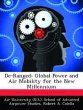

De-Ranged
Global Power and Air Mobility for the New Millennium
Versandkostenfrei!
Versandfertig in über 4 Wochen
17,99 €
inkl. MwSt.
Weitere Ausgaben:

PAYBACK Punkte
9 °P sammeln!

This is a story of long-range airpower, from General Henry "Hap" Arnold's vision of a Global Mission to the Global Strike Task Force and Expeditionary Air Forces of the year 2001. It examines global power from its origins as Strategic Air Command built a fleet of bombers and tankers to meet the needs of the global nuclear deterrent policy of the Cold War. With the end of the Cold War and the changes in force structure that followed, the USAF soon lost its historical roots in global power. This evolution is traced through the studies and commissions of the 1990s established to determine the for...
This is a story of long-range airpower, from General Henry "Hap" Arnold's vision of a Global Mission to the Global Strike Task Force and Expeditionary Air Forces of the year 2001. It examines global power from its origins as Strategic Air Command built a fleet of bombers and tankers to meet the needs of the global nuclear deterrent policy of the Cold War. With the end of the Cold War and the changes in force structure that followed, the USAF soon lost its historical roots in global power. This evolution is traced through the studies and commissions of the 1990s established to determine the force structure for the 21st century. The assumptions that were made to develop a force focused on expeditionary short-range airpower to project global power are established and then examined with four case studies in the application of airpower over long-range. Operation NICKEL GRASS, the US airlift to Israel during the 1973 Yom Kippur War, the British airpower experience in the Falkland Island War with its Vulcan BLACK BUCK missions, Operation ELDORADO CANYON, and Operation DESERT STRIKE are used to provide evidence to support and refute the assumptions made during the 1990s to structure the USAF force structure around short-range expeditionary forces with the intention of forward deploying them in a crisis. These case studies are evaluated and then recommendations are offered for the force structure of the 21st century to ensure an adequate global power force capable of executing a global power strategy. The conclusions of this work do not make recommendations for long or short-range airpower, but rather offer recommendations for methods to enable those forces in the future with a sturdy in-flight refueling force capable of supporting long-range missions free from the entanglements of foreign support and reliance on forward basing. This work has been selected by scholars as being culturally important, and is part of the knowledge base of civilization as we know it. This work was reproduced from the original artifact, and remains as true to the original work as possible. Therefore, you will see the original copyright references, library stamps (as most of these works have been housed in our most important libraries around the world), and other notations in the work. This work is in the public domain in the United States of America, and possibly other nations. Within the United States, you may freely copy and distribute this work, as no entity (individual or corporate) has a copyright on the body of the work. As a reproduction of a historical artifact, this work may contain missing or blurred pages, poor pictures, errant marks, etc. Scholars believe, and we concur, that this work is important enough to be preserved, reproduced, and made generally available to the public. We appreciate your support of the preservation process, and thank you for being an important part of keeping this knowledge alive and relevant.
Andere Kunden interessierten sich für