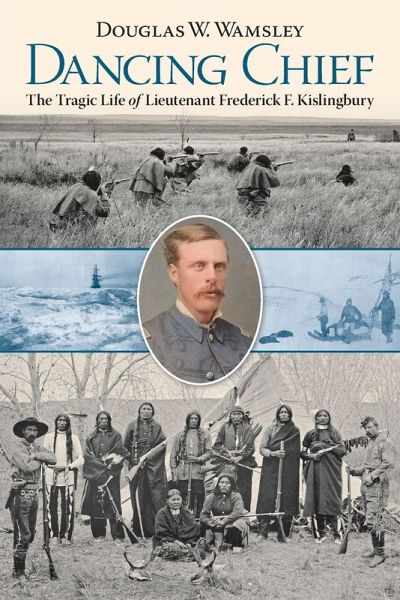
Dancing Chief
The Tragic Life of Lieutenant Frederick F. Kislingbury
Versandkostenfrei!
Versandfertig in 1-2 Wochen
32,99 €
inkl. MwSt.

PAYBACK Punkte
16 °P sammeln!

Frederick Foster Kislingbury lived a short but eventful life in the service of his adopted country. After service in the Civil War, Kislingbury became captivated by the young nation's western movement and in making a name for himself. Though married and well-settled in a comfortable office position in metropolitan Detroit, a love of adventure led him to voluntarily pursue a field position with the U.S. Army on the plains. As a junior officer, his military career tracked some of the most significant and hard-fought conflicts of the Indian wars and the country's westward growth. His path followe...
Frederick Foster Kislingbury lived a short but eventful life in the service of his adopted country. After service in the Civil War, Kislingbury became captivated by the young nation's western movement and in making a name for himself. Though married and well-settled in a comfortable office position in metropolitan Detroit, a love of adventure led him to voluntarily pursue a field position with the U.S. Army on the plains. As a junior officer, his military career tracked some of the most significant and hard-fought conflicts of the Indian wars and the country's westward growth. His path followed the final tragic events on the central plains, to the far southern Texas/Mexican border and ultimately to the northern plains in the aftermath of Custer's defeat. Kislingbury fashioned a unique role for himself and earned high praise from the senior military brass and his fellow soldiers. As a highly respected leader of Indian scouts, he worked side-by-side with Indigenous peoples, including the Pawnee and Crow, building close-knit relationships based on trust and mutual respect. He succeeded in the field by virtue of an open mind that was prepared to learn from his companions. In the face of life-and-death encounters, his Indian allies were prepared to risk their own lives in his defense and Kislingbury, sympathetic to their situation, likewise sought to improve their well-being. Eager for further adventure and heartsick Expedition of 1881. The regretful falling out with his commander, the experience for which he is mostly remembered, if remembered at all, has left Kislingbury a fringe player in its history and overshadows his accomplishments. Through primary source journals, letters, military reports and other unpublished materials, Dancing Chief brings to light the largely untold story of a remarkable man whose promising and noteworthy life was so tragically cut short. His story similarly adds to our knowledge of the U.S. Army on the Plains and in the Arctic.
Andere Kunden interessierten sich für