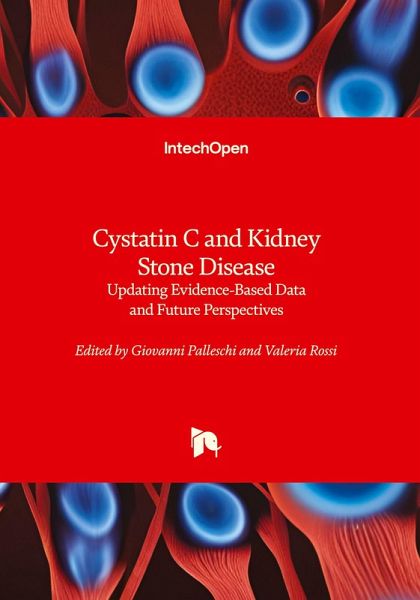
Cystatin C and Kidney Stone Disease - Updating Evidence-Based Data and Future Perspectives
Updating Evidence-Based Data and Future Perspectives
Herausgeber: Palleschi, Giovanni; Rossi, Valeria
Versandkostenfrei!
Versandfertig in 1-2 Wochen
119,00 €
inkl. MwSt.

PAYBACK Punkte
0 °P sammeln!

The management of acute and chronic kidney disease has undergone significant improvement over the last decade. This is a consequence of significant technological innovations and important findings provided by basic research. The use of molecular markers is increasingly enabling the prediction of clinical and therapeutic outcomes in various conditions. In kidney disease diagnosis and treatment, the use of Cystatin C helps us to overcome the limitations of other serum parameters, such as creatinine, which can mask the actual status of the pathological condition. Many authors have reported new in...
The management of acute and chronic kidney disease has undergone significant improvement over the last decade. This is a consequence of significant technological innovations and important findings provided by basic research. The use of molecular markers is increasingly enabling the prediction of clinical and therapeutic outcomes in various conditions. In kidney disease diagnosis and treatment, the use of Cystatin C helps us to overcome the limitations of other serum parameters, such as creatinine, which can mask the actual status of the pathological condition. Many authors have reported new insights in the literature about the role of Cystatin C, not only as a good predictor of chronic kidney disease, but also as a reliable parameter in the follow-up of subjects undergoing kidney transplant. Furthermore, in the fields of acute and chronic kidney disease, significant improvements in the therapeutic management of stones have been achieved. Specifically, surgical treatment has become even more minimally invasive, and the instruments available nowadays enable us to achieve a stone-free result in a higher percentage of patients in a shorter time with a lower incidence of complications. The book updates knowledge about these two important topics through the contributions of authors who are experts in the field.
Andere Kunden interessierten sich für