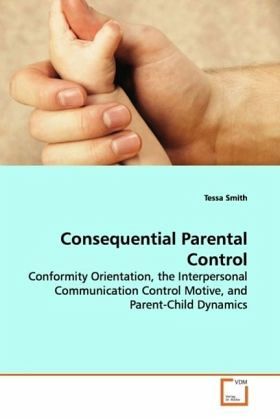
Consequential Parental Control
Conformity Orientation, the Interpersonal Communication Control Motive, and Parent-Child Dynamics
Versandkostenfrei!
Versandfertig in 6-10 Tagen
32,99 €
inkl. MwSt.

PAYBACK Punkte
16 °P sammeln!

Family communication structure and the motives parents employ when communicating with their young adult children interact to produce several consequences. The specific repercussions that result from increased conformity and control need to be further identified to guide the development of training workshops, intervention programs, and insight to parents wishing to change their behaviors. Thus, this study explored the effect of control motives and conformity orientation (protective and consensual structures) on confidence, independence, and perceived communication competence. The impact of chil...
Family communication structure and the motives
parents employ when communicating with their young
adult children interact to produce several
consequences. The specific repercussions that result
from increased conformity and control need to be
further identified to guide the development of
training workshops, intervention programs, and
insight to parents wishing to change their
behaviors. Thus, this study explored the effect of
control motives and conformity orientation
(protective and consensual structures) on
confidence, independence, and perceived
communication competence. The impact of children s
evaluation of parental control (i.e., viewing
parental control as a sign of love and affection) on
the three outcome variables was also of interest.
The results showed a significant positive
correlation between conformity orientation and
parental control, a significant negative correlation
between parental control and evaluations of control,
and significant negative correlations between
control and all three outcome variables. Evaluations
of parental control did not demonstrate
predictability in changes in the outcome variables.
parents employ when communicating with their young
adult children interact to produce several
consequences. The specific repercussions that result
from increased conformity and control need to be
further identified to guide the development of
training workshops, intervention programs, and
insight to parents wishing to change their
behaviors. Thus, this study explored the effect of
control motives and conformity orientation
(protective and consensual structures) on
confidence, independence, and perceived
communication competence. The impact of children s
evaluation of parental control (i.e., viewing
parental control as a sign of love and affection) on
the three outcome variables was also of interest.
The results showed a significant positive
correlation between conformity orientation and
parental control, a significant negative correlation
between parental control and evaluations of control,
and significant negative correlations between
control and all three outcome variables. Evaluations
of parental control did not demonstrate
predictability in changes in the outcome variables.
Andere Kunden interessierten sich für