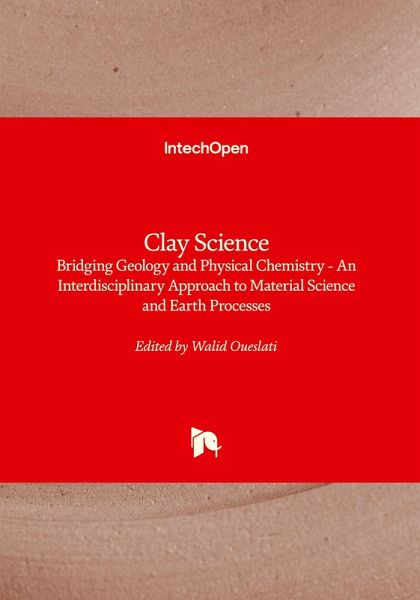
Clay Science - Bridging Geology and Physical Chemistry - An Interdisciplinary Approach to Material Science and Earth Processes
Bridging Geology and Physical Chemistry - An Interdisciplinary Approach to Material Science and Earth Processes
Herausgeber: Oueslati, Walid
Versandkostenfrei!
Versandfertig in 1-2 Wochen
139,00 €
inkl. MwSt.

PAYBACK Punkte
0 °P sammeln!

Clay materials have exceptional promise for addressing key challenges in environmental protection, sustainable building, and chemical innovation because they stand at the fascinating intersection of physical chemistry and earth sciences. From basic mineralogical characterisation using X-ray diffraction and purifying methods to state-of-the-art applications in electrochemical sensing, catalytic processes, and geopolymer technology, this edited volume offers a thorough examination of clay research. Readers will learn how clay minerals, such as smectite, kaolinite, illite, and bentonite, possess ...
Clay materials have exceptional promise for addressing key challenges in environmental protection, sustainable building, and chemical innovation because they stand at the fascinating intersection of physical chemistry and earth sciences. From basic mineralogical characterisation using X-ray diffraction and purifying methods to state-of-the-art applications in electrochemical sensing, catalytic processes, and geopolymer technology, this edited volume offers a thorough examination of clay research. Readers will learn how clay minerals, such as smectite, kaolinite, illite, and bentonite, possess layered structures, ion-exchange properties, and surface chemistry that enable revolutionary applications across various fields. The book skillfully combines geological perspectives with physical-chemical concepts, demonstrating how knowledge of clay formation, structure, and reactivity leads to innovative solutions for waste recycling, organic synthesis, oil-well cementing, and pollutant detection. This collection provides essential insights for researchers, engineers, and students, whether they are investigating clay minerals for environmental monitoring, developing sustainable building materials through alkaline activation, or harnessing natural catalytic properties for chemical transformations. Sustainability, enhanced mechanical performance, and environmental responsibility are emphasized in this book, which encompasses a wide range of topics, from analytical techniques to industrial applications. Materials scientists, geotechnical engineers, and environmental chemists interested in understanding how ancient geological materials continue to support modern technological development will find this volume invaluable for its interdisciplinary approach. This work is a crucial resource for developing clay-based technology in the twenty-first century, as it combines basic characterization approaches with practical applications.
Andere Kunden interessierten sich für