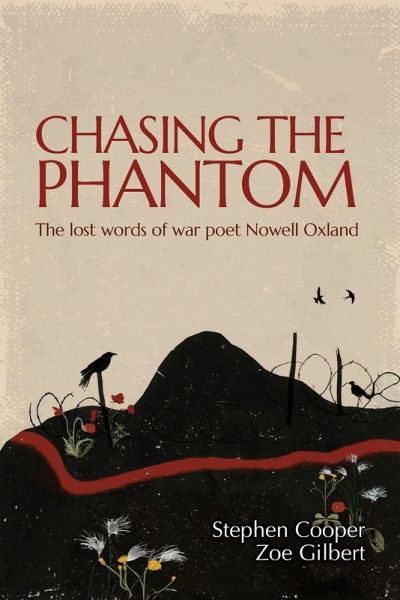
Chasing the Phantom
The lost words of war poet Nowell Oxland
Versandkostenfrei!
Versandfertig in 1-2 Wochen
31,99 €
inkl. MwSt.

PAYBACK Punkte
16 °P sammeln!

Lieutenant Nowell Oxland, killed at Gallipoli in 1915 aged just 24, wrote poems and stories deeply rooted in place. He is unknown bar one poem Farewell, published anonymously in The Times nine days after his death. A native of Cumberland, he wrote it on the way to war, his heart longing for home: 'There's a pool for which I'm grieving, Near the water-ouzel's home.... And the curlews faintly crying, 'Mid the wastes of Cumberland.' Chasing the Phantom shares Oxland's unpublished poems and stories, which range from the darkly gothic and supernatural to the comic. In the foreword, nature writer Jo...
Lieutenant Nowell Oxland, killed at Gallipoli in 1915 aged just 24, wrote poems and stories deeply rooted in place. He is unknown bar one poem Farewell, published anonymously in The Times nine days after his death. A native of Cumberland, he wrote it on the way to war, his heart longing for home: 'There's a pool for which I'm grieving, Near the water-ouzel's home.... And the curlews faintly crying, 'Mid the wastes of Cumberland.' Chasing the Phantom shares Oxland's unpublished poems and stories, which range from the darkly gothic and supernatural to the comic. In the foreword, nature writer John Lewis-Stempel describes them as work full of promise and places Nowell Oxland firmly as an example of the 'lost generation'. His friend Amy Hawthorn published a small private edition of Nowell's work and a sole version and a few transcribed manuscripts in her hand survive. In A Green Field Far Away: Nowell Oxland, Stephen Cooper follows Oxland's early life in Alston Moor, to Durham school years and University at Oxford. How he excelled on the rugby field, enlisted in the Border Regiment and finally died at Gallipoli. In Chasing Amy, Zoe Gilbert charts the journey of finding traces of Amy Hawthorn's life, her and Oxland's connections through place to Alston Moor and the Lake District, their friendship and the mystery of what happened to his lost work. Robert Macfarlane describes Chasing the Phantom as ' important chapter to the modern history of Cumbrian place-writing.'
Andere Kunden interessierten sich für