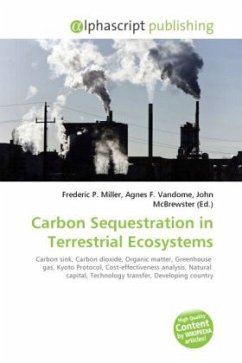
Carbon Sequestration in Terrestrial Ecosystems
Versandkostenfrei!
Versandfertig in 6-10 Tagen
30,99 €
inkl. MwSt.

PAYBACK Punkte
15 °P sammeln!

Carbon Sequestration (CS) by Terrestrial Ecosystems (TE) is the net removal of carbon dioxide (CO2) from the atmosphere or the avoidance of carbon dioxide (CO2) emissions from terrestrial ecosystems into the atmosphere. The removal process includes CO2 uptake from the atmosphere by all chlorophyllous plants, through photosynthesis. This C is stored as plant biomass (in the trunks, branches, leaves and roots of the plants) and organic matter in the soil (IPCC 2000). The terrestrial carbon sequestrations depend on land use practices and different ecosystem conditions that sustain established veg...
Carbon Sequestration (CS) by Terrestrial Ecosystems (TE) is the net removal of carbon dioxide (CO2) from the atmosphere or the avoidance of carbon dioxide (CO2) emissions from terrestrial ecosystems into the atmosphere. The removal process includes CO2 uptake from the atmosphere by all chlorophyllous plants, through photosynthesis. This C is stored as plant biomass (in the trunks, branches, leaves and roots of the plants) and organic matter in the soil (IPCC 2000). The terrestrial carbon sequestrations depend on land use practices and different ecosystem conditions that sustain established vegetation over longer periods. Terrestrial carbon sequestration is not only of interest in those countries which have an obligation to reduce greenhouse gas emission under the Kyoto Protocol.
Andere Kunden interessierten sich für