
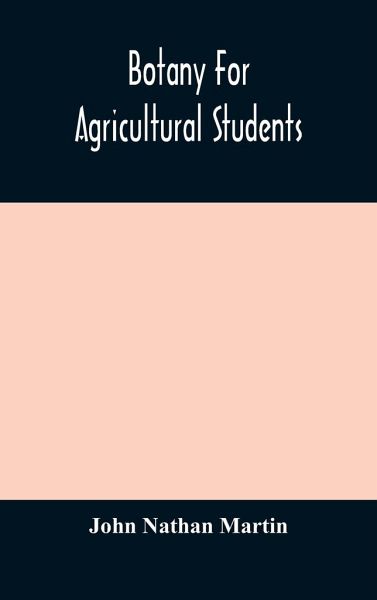
Botany For Agricultural Students

PAYBACK Punkte
19 °P sammeln!

Step into the living world of plants and discover the foundations of modern agriculture. First published in the early twentieth century, John Nathan Martin's Botany For Agricultural Students stands as a vital agricultural botany textbook, bridging the gap between plant science and practical crop cultivation techniques. With clarity and precision, Martin guides readers through the essentials of plant biology for students, unveiling the intricate relationships between structure, growth, and the environmental challenges faced by crops. This enduring botany reference book offers more than an intro...
Step into the living world of plants and discover the foundations of modern agriculture. First published in the early twentieth century, John Nathan Martin's Botany For Agricultural Students stands as a vital agricultural botany textbook, bridging the gap between plant science and practical crop cultivation techniques. With clarity and precision, Martin guides readers through the essentials of plant biology for students, unveiling the intricate relationships between structure, growth, and the environmental challenges faced by crops. This enduring botany reference book offers more than an introduction to botany; it is a comprehensive educational botany resource, trusted by generations of academic botany studies and agricultural science topics. Its approach balances scientific rigour with accessibility, making it the ideal student textbook for agriculture courses as well as a valuable companion for lifelong learners. Rich in insight and grounded in the context of early 20th century botany, Martin's work remains relevant for those seeking a solid foundation in plant science or a deeper understanding of the natural world that sustains us. Republished by Alpha Editions in a careful modern edition, this volume preserves the spirit of the original while making it effortless to enjoy today - a heritage title prepared for readers and collectors alike. Whether you are embarking on a botany course or curating a classic library, this plant science guide is both a practical tool and a cultural treasure.
Andere Kunden interessierten sich für






![Cover A Botanical Note-book for the Use of Students of Practical Botany [microform]](https://bilder.buecher.de/produkte/65/65514/65514011n.jpg "A Botanical Note-book for the Use of Students of Practical Botany [microform]")
![Cover Introductory Lecture to the Course on Botany [microform]: Delivered Before the Students of Arts and Medicine, McGill College, Session, 1857](https://bilder.buecher.de/produkte/68/68635/68635395n.jpg "Introductory Lecture to the Course on Botany [microform]: Delivered Before the Students of Arts and Medicine, McGill College, Session, 1857")