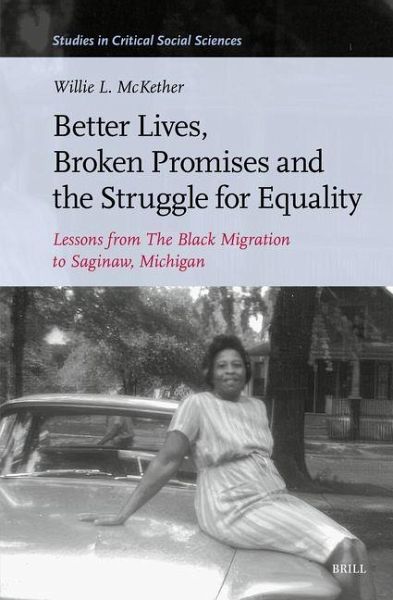
Better Lives, Broken Promises and the Struggle for Equality
Lessons from the Black Migration to Saginaw, Michigan
Versandkostenfrei!
Erscheint vorauss. 18. Dezember 2025
131,99 €
inkl. MwSt.

PAYBACK Punkte
66 °P sammeln!

Through a case study, this ethno-historical analysis uses the oral histories of three generations of African American migrants to Saginaw, Michigan to show how social processes within the African American community changed in response to the local race-based opportunity structure. This study focuses on the black migration to this northern industrial community that occurred in two waves between 1915 and 1960 and argues that different levels of expectations informed how each wave responded to the local social structure and the resulting demands for change. What will be made clear is that the soc...
Through a case study, this ethno-historical analysis uses the oral histories of three generations of African American migrants to Saginaw, Michigan to show how social processes within the African American community changed in response to the local race-based opportunity structure. This study focuses on the black migration to this northern industrial community that occurred in two waves between 1915 and 1960 and argues that different levels of expectations informed how each wave responded to the local social structure and the resulting demands for change. What will be made clear is that the social landscape for African Americans coming north at the start of the second half of the last century changed drastically, based upon a foundation laid by the migrants arriving in the first half of the twentieth century. This book suggests that the earlier cohort served to fill the social spaces created by the pre-1915 migrants and learned how to 'get by' in a society that offered few real opportunities for its Black citizens. The second wave arrived after World War II into a society that promised more, even as it failed to deliver, and demands for social justice became louder. This book details the impact of each wave through interviews and secondary data. Then it locates the origins of an activist black church and middle-class demands in the changes to material conditions of the city's Black residents and hence, cultural change over time.