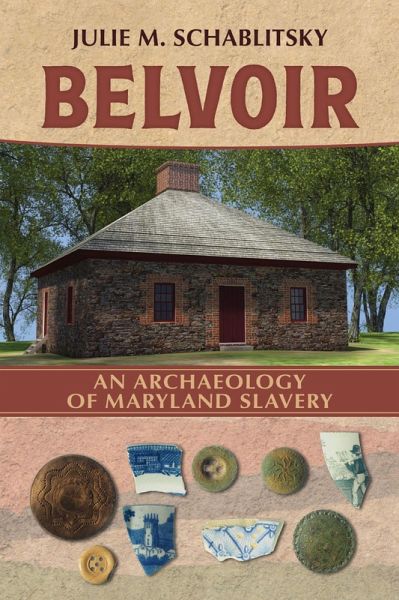
Belvoir
An Archaeology of Maryland Slavery
Versandkostenfrei!
Versandfertig in 2-4 Wochen
42,99 €
inkl. MwSt.

PAYBACK Punkte
21 °P sammeln!

"This work of historical archaeology focuses on the story of the Belvoir Quarter for enslaved workers at Belvoir, a 1730's Maryland manor and plantation owned by descendants of Francis Scott Key. Julie M. Schablitsky excavated the brick and stone Belvoir Quarter and found architectural features with layers of artifacts spanning more than eighty years of habitation. Belvoir takes the discovery of the quarter along with its material culture, such as sherds, buttons, tobacco pipe stems, food remains, and spiritual items, and discusses the finds in the context of other similar sites of enslavement...
"This work of historical archaeology focuses on the story of the Belvoir Quarter for enslaved workers at Belvoir, a 1730's Maryland manor and plantation owned by descendants of Francis Scott Key. Julie M. Schablitsky excavated the brick and stone Belvoir Quarter and found architectural features with layers of artifacts spanning more than eighty years of habitation. Belvoir takes the discovery of the quarter along with its material culture, such as sherds, buttons, tobacco pipe stems, food remains, and spiritual items, and discusses the finds in the context of other similar sites of enslavement. Most importantly, Schablitsky encourages readers to consider how these objects were used by enslaved people to survive, resist, and preserve their humanity. In addition, as a critical part of her work, she consulted with and included descendants of the enslaved individuals at Belvoir, asking them what they wanted to know about their family histories, in an effort to help them heal. This book serves as a model of archaeological research at a site of enslavement that privileges restorative justice"-- Provided by publisher.