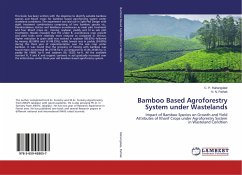
Bamboo Based Agroforestry System under Wastelands
Impact of Bamboo Species on Growth and Yield Attributes of Kharif Crops under Agroforestry System in Wasteland Condtion
Versandkostenfrei!
Versandfertig in 6-10 Tagen
41,99 €
inkl. MwSt.

PAYBACK Punkte
21 °P sammeln!

This book has been written with the objective to identify suitable bamboo species and Kharif crops for bamboo based agroforestry system under wasteland conditions. The experiment was laid out in Split Plot Design with eight treatment combinations comprising of two bamboo species viz., Dendrocalamus strictus and Bambusa arundinacea as main plot treatment and four Kharif crops viz., moong, soybean, paddy and til as sub plot treatments. Results revealed that the under B. arundinacea crop growth and yield traits were relatively more reduced as compared D. strictus. Higher reduction in grain yield ...
This book has been written with the objective to identify suitable bamboo species and Kharif crops for bamboo based agroforestry system under wasteland conditions. The experiment was laid out in Split Plot Design with eight treatment combinations comprising of two bamboo species viz., Dendrocalamus strictus and Bambusa arundinacea as main plot treatment and four Kharif crops viz., moong, soybean, paddy and til as sub plot treatments. Results revealed that the under B. arundinacea crop growth and yield traits were relatively more reduced as compared D. strictus. Higher reduction in grain yield was noticed in soybean (68.83%) followed by moong (63.94%) and til (49.25%), while lowest was in paddy (34.00%) during the third year of experimentation over the sole crop under bamboo. It was found that the growing of moong with bamboo was found more economical (Rs 27736 ha-1) as compared to til (Rs 23365 ha-1), paddy (Rs 19693 ha-1) and soybean (Rs 13323 ha-1). All the available nutrient N, P and K and organic contents in soil gradually increased over the initial status under three year old bamboo based agroforestry system.
Andere Kunden interessierten sich für