• Produktbild: Astroparticle Physics and Cosmology
  • Produktbild: Astroparticle Physics and Cosmology
Band 975 - 11%

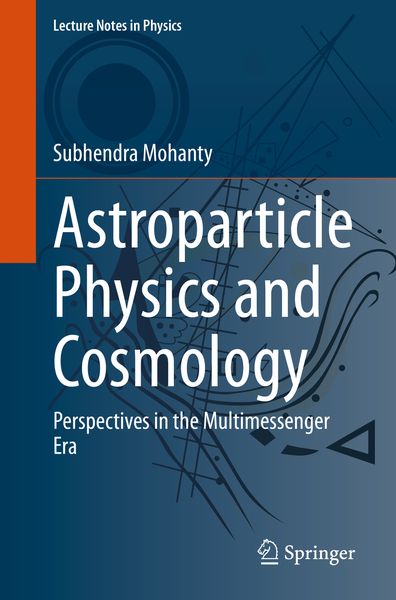
Astroparticle Physics and Cosmology Perspectives in the Multimessenger Era

Aus der Reihe Lecture Notes in Physics
11% sparen

65,99 € UVP 74,89 €

inkl. gesetzl. MwSt., Versandkostenfrei

Lieferung nach Hause

Beschreibung

Produktdetails

Einband

Taschenbuch

Erscheinungsdatum

10.10.2020

Verlag

Springer

Seitenzahl

287

Maße (L/B/H)

23,5/15,5/1,7 cm

Gewicht

470 g

Auflage

1st edition 2020

Sprache

Englisch

ISBN

978-3-030-56200-7

Beschreibung

Produktdetails

Einband

Taschenbuch

Erscheinungsdatum

10.10.2020

Verlag

Springer

Seitenzahl

287

Maße (L/B/H)

23,5/15,5/1,7 cm

Gewicht

470 g

Auflage

1st edition 2020

Sprache

Englisch

ISBN

978-3-030-56200-7

Herstelleradresse

Springer-Verlag GmbH
Tiergartenstr. 17
69121 Heidelberg
DE

Email: [email protected]

Kundinnen und Kunden meinen

0 Bewertungen

Informationen zu Bewertungen

Zur Abgabe einer Bewertung ist eine Anmeldung im Konto notwendig. Die Authentizität der Bewertungen wird von uns nicht überprüft. Wir behalten uns vor, Bewertungstexte, die unseren Richtlinien widersprechen, entsprechend zu kürzen oder zu löschen.

Die Bewertungen sind nach Format, Anzahl Sterne und Datum sortiert.

Verfassen Sie die erste Bewertung zu diesem Artikel

Helfen Sie anderen Kund*innen durch Ihre Meinung

Kundinnen und Kunden meinen

0 Bewertungen filtern

  • Produktbild: Astroparticle Physics and Cosmology
  • Produktbild: Astroparticle Physics and Cosmology
  • Preface

    1 Effective potential and phase transitions 11.1 Coleman-Weinberg one loop effective potential . . . . . . . . . . 11.1.1 One-loop effective potential of ¸Á4 theory . . . . . . . . 31.1.2 Dimensional regularization . . . . . . . . . . . . . . . . . . 41.1.3 Renormalization scheme independence of the effective potential . . . . . . . . . . . . . . . . . . . . . . . . . . . . . 51.2 Standard model Higgs potential . . . . . . . . . . . . . . . . . . . . 61.3 Higgs vacuumstability . . . . . . . . . . . . . . . . . . . . . . . . . 61.4 Effective potential at finite temperature . . . . . . . . . . . . . . . 61.5 Phase transitions . . . . . . . . . . . . . . . . . . . . . . . . . . . . 6

    2 GravitationalWaves 92.1 Linearised gravity . . . . . . . . . . . . . . . . . . . . . . . . . . . . 92.2 Energy loss by gravitational radiation frombinary neutron stars or black holes . . . . . . . . . . . . . . . . . . . . . . . . . . . . . . . 122.3 Waveformof gravitational waves from binary mergers . . . . . . 152.4 Gravitational waves from phase transitions . . . . . . . . . . . . . 152.5 Gravitational waves andMulti-messenger astronomy . . . . . . . 18

    3 Black Holes 193.0.1 Kerr black hole . . . . . . . . . . . . . . . . . . . . . . . . . 193.0.2 Photon orbit around Kerr black holes . . . . . . . . . . . . 193.0.3 Massive particle orbits around Kerr black holes . . . . . . 193.0.4 Frame dragging and Lens-Thirring precession of gyroscopes 193.0.5 Space-time structure of Kerr black hole . . . . . . . . . . . 193.0.6 Penrose process . . . . . . . . . . . . . . . . . . . . . . . . . 193.0.7 Super-radiance . . . . . . . . . . . . . . . . . . . . . . . . . 19

    4 High energy cosmic rays 214.1 Sources of high energy cosmic rays . . . . . . . . . . . . . . . . . . 214.1.1 High energy positrons from the galaxy . . . . . . . . . . . 214.1.2 High energy gamma ray observations . . . . . . . . . . . . 214.1.3 Ultra-High energy neutrino observations . . . . . . . . . . 21

    5 DarkMatter 235.1 Equilibriumdistribution of collision-less particles . . . . . . . . . 235.1.1 Detection of dark matter . . . . . . . . . . . . . . . . . . . 255.1.2 Interaction of dark matter with standard model particles 255.1.3 Higgs portal . . . . . . . . . . . . . . . . . . . . . . . . . . . 255.1.4 Vector portal . . . . . . . . . . . . . . . . . . . . . . . . . . 255.1.5 Axion portlal . . . . . . . . . . . . . . . . . . . . . . . . . . 255.1.6 Neutrino portal . . . . . . . . . . . . . . . . . . . . . . . . . 255.2 Dark matter signals in high energy photons, positrons and neutrinos observations . . . . . . . . . . . . . . . . . . . . . . . . . . . . . 265.3 Effective DM-nucleon interaction operators . . . . . . . . . . . . 265.3.1 Direct detection experiments . . . . . . . . . . . . . . . . . 275.3.2 Collider searches for dark matter . . . . . . . . . . . . . . 275.4 Dark matter at cosmological scales . . . . . . . . . . . . . . . . . . 275.5 Boltzmann equation . . . . . . . . . . . . . . . . . . . . . . . . . . 275.6 Relic density . . . . . . . . . . . . . . . . . . . . . . . . . . . . . . . 315.6.1 Relic density of Cold DarkMatter by Freeze-Out . . . . . 335.6.2 Cold dark matter relic by Freeze-In . . . . . . . . . . . . . 365.7 Relic density of SIMP dark matter . . . . . . . . . . . . . . . . . . 395.8 Relic density ofWarmdark matter . . . . . . . . . . . . . . . . . . 395.9 Structure formation in cold darkmatter . . . . . . . . . . . . . . . 395.10 Structure formation in warmdarkmatter . . . . . . . . . . . . . . 395.11 Structure formation in SIMP dark matter . . . . . . . . . . . . . . 395.12 Fuzzy dark matter . . . . . . . . . . . . . . . . . . . . . . . . . . . . 395.13 Primordial black holes as dark matter . . . . . . . . . . . . . . . . 39

    6 Axions 436.1 The Strong CP problem . . . . . . . . . . . . . . . . . . . . . . . . . 436.2 Models of axions . . . . . . . . . . . . . . . . . . . . . . . . . . . . . 436.3 Axion darkmatter . . . . . . . . . . . . . . . . . . . . . . . . . . . . 436.4 Direct detection of axions . . . . . . . . . . . . . . . . . . . . . . . 43

    7 Supersymmetry 457.1 Lorentz transformations of fields . . . . . . . . . . . . . . . . . . . 457.1.1 Weyl, Dirac andMajorana fermions . . . . . . . . . . . . . 467.1.2 Dotted and undotted indices . . . . . . . . . . . . . . . . . 487.2 Grassmann variables . . . . . . . . . . . . . . . . . . . . . . . . . . 497.3 Supersymmetric transformations of fields . . . . . . . . . . . . . 507.3.1 Generators of SUSY transformations . . . . . . . . . . . . 527.4 Supersymmetry as translations in superspace . . . . . . . . . . . 537.5 SUSY invariant Lagrangian . . . . . . . . . . . . . . . . . . . . . . . 587.6 SUSY gauge theories . . . . . . . . . . . . . . . . . . . . . . . . . . . 607.6.1 Abelian SUSY gauge theory . . . . . . . . . . . . . . . . . . 607.6.2 Non-abelian SUSY gauge theory . . . . . . . . . . . . . . . 637.7 MSSM . . . . . . . . . . . . . . . . . . . . . . . . . . . . . . . . . . . 677.8 Higgs potential inMSSM . . . . . . . . . . . . . . . . . . . . . . . . 677.8.1 Gauge boson masses . . . . . . . . . . . . . . . . . . . . . . 707.8.2 Higgs masses . . . . . . . . . . . . . . . . . . . . . . . . . . 717.8.3 Higgs couplings . . . . . . . . . . . . . . . . . . . . . . . . . 757.9 Neutralino mass . . . . . . . . . . . . . . . . . . . . . . . . . . . . . 77

    8 Grand Unified Theories 798.1 SU(5) . . . . . . . . . . . . . . . . . . . . . . . . . . . . . . . . . . . . 798.2 SO(10) . . . . . . . . . . . . . . . . . . . . . . . . . . . . . . . . . . . 79

    9 Particle physics models of Inflation 819.1 Starobinsky model . . . . . . . . . . . . . . . . . . . . . . . . . . . . 819.2 Supergravity models . . . . . . . . . . . . . . . . . . . . . . . . . . . 819.3 CosmicMicrowave Background . . . . . . . . . . . . . . . . . . . 819.4 Constraints of InflationModels from CMB . . . . . . . . . . . . . 819.5 Constrains on NeutrinoMass from CMB and LSS . . . . . . . . . 81