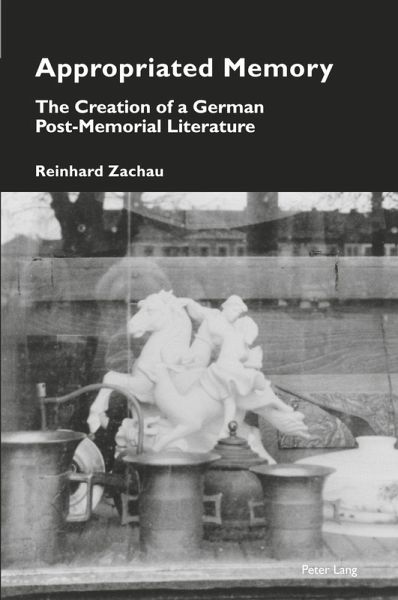
Appropriated Memory
The Creation of a German Post-Memorial Literature
Herausgegeben: Pizzi, Katia
Versandkostenfrei!
Versandfertig in 1-2 Wochen
55,95 €
inkl. MwSt.
Weitere Ausgaben:

PAYBACK Punkte
0 °P sammeln!

Th is b ook offers a survey of post-World War II German-language post-memorial writing. An analysis of the books by Heinrich Böll, Günter Grass, and Wolfgang Koeppen e xposes the difficult path of German writing about the Holocaust. Koeppen's unauthorized appropriation of Jakob Littner's survivor memoir serves as the frame for th is study, expos ing the difference s between perpetrator and victim perspectives. The various attempts by the current generation of authors to bridge th is divide reflect the renewed interest and changed attitude s towards the Holocaust that emerged in Germany after...
Th is b ook offers a survey of post-World War II German-language post-memorial writing. An analysis of the books by Heinrich Böll, Günter Grass, and Wolfgang Koeppen e xposes the difficult path of German writing about the Holocaust. Koeppen's unauthorized appropriation of Jakob Littner's survivor memoir serves as the frame for th is study, expos ing the difference s between perpetrator and victim perspectives. The various attempts by the current generation of authors to bridge th is divide reflect the renewed interest and changed attitude s towards the Holocaust that emerged in Germany after R eunification. Included in this volume are W. G. Sebald's imaginary dialogue between a victim and a perpetrator, Ursula Krechel's exploration of Jewish life in Shanghai from a Jewish perspective, Iris Hanika's presentation of the distraught mindset of a member of Germany's second perpetrator generation, and Kevin Vennemann's narrative about a Jewish child in the midst of a Polish massacre.