Alice:
An intersemiotic adventure through the eyes of Menippean satire
Versandkostenfrei!
Versandfertig in 6-10 Tagen
33,99 €
inkl. MwSt.

PAYBACK Punkte
17 °P sammeln!

Adaptations of literary works for the cinema are becoming increasingly common, which leads to discussions about the fidelity and hierarchy of the 'original' (literary texts) and the 'copy' (film). However, the reading/interpretation of a literary work and the transposition of the text into film promote transformations that are specific to the semiotic medium. In this context, I analyze the intersemiotic translation of the books Alice's Adventures in Wonderland (1865) and Through the Looking Glass and What Alice Found There (1871), by the English writer Lewis Carroll for the film Alice in Wonde...
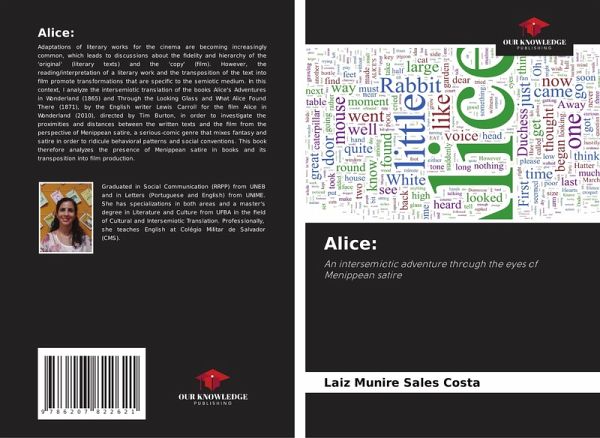
Adaptations of literary works for the cinema are becoming increasingly common, which leads to discussions about the fidelity and hierarchy of the 'original' (literary texts) and the 'copy' (film). However, the reading/interpretation of a literary work and the transposition of the text into film promote transformations that are specific to the semiotic medium. In this context, I analyze the intersemiotic translation of the books Alice's Adventures in Wonderland (1865) and Through the Looking Glass and What Alice Found There (1871), by the English writer Lewis Carroll for the film Alice in Wonderland (2010), directed by Tim Burton, in order to investigate the proximities and distances between the written texts and the film from the perspective of Menippean satire, a serious-comic genre that mixes fantasy and satire in order to ridicule behavioral patterns and social conventions. This book therefore analyzes the presence of Menippean satire in books and its transposition into film production.
Andere Kunden interessierten sich für