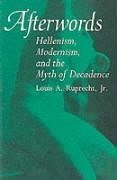
Afterwords
Hellenism, Modernism, and the Myth of Decadence
Versandkostenfrei!
Versandfertig in über 4 Wochen
33,99 €
inkl. MwSt.

PAYBACK Punkte
17 °P sammeln!

This book about nostalgia raises the question of why it has become such a dominant and influential posture in contemporary philosophical and theological writing. The author notes the presence of the word "after" in a great many contemporary academic titles, and notes a spiritual sort of alienation that many feel in the "modern age". Out of this scholarly discontent emerges one of two related attempts: the attempt to return to a premodern manner of thinking and being (nostalgia); and the playful flight into some vaguely defined "postmodernity" (utopia). In either case, the common perception is ...
This book about nostalgia raises the question of why it has become such a dominant and influential posture in contemporary philosophical and theological writing. The author notes the presence of the word "after" in a great many contemporary academic titles, and notes a spiritual sort of alienation that many feel in the "modern age". Out of this scholarly discontent emerges one of two related attempts: the attempt to return to a premodern manner of thinking and being (nostalgia); and the playful flight into some vaguely defined "postmodernity" (utopia). In either case, the common perception is that modernity is a problem, a problem to be avoided or escaped. Bringing philosophical and theological texts into conversation with one another, the book discovers a startling similarity in the accounts of modernness offered in these disparate idioms. Both are telling a story - a story which, the author argues, is as seductive as it is misguided.