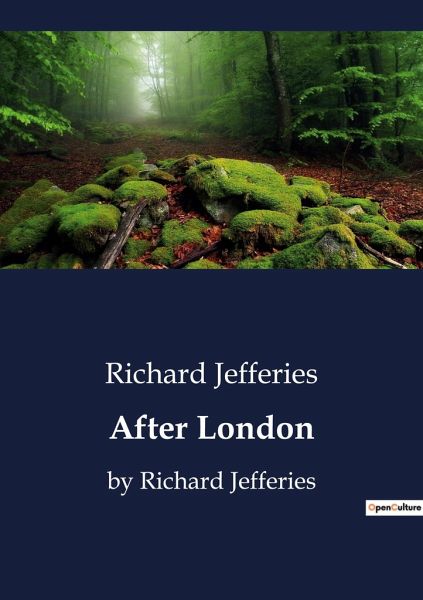
After London
The transition of England: A Post-Apocalyptic Exploration
Versandkostenfrei!
Versandfertig in 1-2 Wochen
22,95 €
inkl. MwSt.

PAYBACK Punkte
0 °P sammeln!

"After London; Or, Wild England" by Richard Jefferies is a post-apocalyptic novel that envisions a future where England has reverted to a state of wilderness and barbarism following an unspecified catastrophe. The narrative is divided into two parts: "The Relapse into Barbarism" and "Wild England." In the first part, Jefferies describes the transformation of the English landscape as nature reclaims the land. Fields become overgrown with forests, and wild animals, including feral cats, dogs, and cattle, roam freely. The second part focuses on the human societies that emerge in this new world. T...
"After London; Or, Wild England" by Richard Jefferies is a post-apocalyptic novel that envisions a future where England has reverted to a state of wilderness and barbarism following an unspecified catastrophe. The narrative is divided into two parts: "The Relapse into Barbarism" and "Wild England." In the first part, Jefferies describes the transformation of the English landscape as nature reclaims the land. Fields become overgrown with forests, and wild animals, including feral cats, dogs, and cattle, roam freely. The second part focuses on the human societies that emerge in this new world. The remnants of civilization are scattered into small, isolated communities, each with its own governance and struggles. The novel explores the dynamics between different groups, including the Bushmen, who live primitively in the woods, and the Romany, who maintain a nomadic lifestyle. The narrative also delves into the conflicts between these groups and the more organized societies that have formed around the central lake. Jefferies uses this setting to reflect on themes of civilization, nature, and the cyclical nature of history, suggesting that human progress is fragile and can easily be undone.