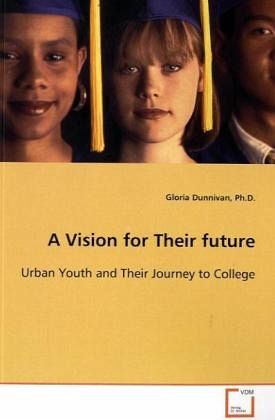
A Vision for Their future
Urban Youth and Their Journey to College
Versandkostenfrei!
Versandfertig in 6-10 Tagen
32,99 €
inkl. MwSt.

PAYBACK Punkte
16 °P sammeln!

The need for a more educated and trained workforce highlights the importance for youth to continue their education beyond high school. This is important for urban students with low socioeconomic backgrounds as they seek to improve their economic status through education; but few succeed. To gain a more emic understanding of the process, fifteen young adults told the story of their journey. Social-psychological processes emerged that helped develop a substantive theory about the support and obstacles the students had as they transitioned to postsecondary education. The substantive theory highli...
The need for a more educated and trained workforce
highlights the importance for youth to continue
their education beyond high school. This is
important for urban students with low socioeconomic
backgrounds as they seek to improve their economic
status through education; but few succeed. To gain a
more emic understanding of the process, fifteen
young adults told the story of their journey. Social-
psychological processes emerged that helped develop
a substantive theory about the support and obstacles
the students had as they transitioned to
postsecondary education. The substantive theory
highlights the relationship between psychological
and social development during the socialization
process that helped in developing
positive self-concepts, motivation,
and to overcome nonacademic barriers
created by an urban environment and low
socioeconomic status. Adults and peers served as
socialization agents in socializing them into a
college-going culture. Based on the substantive
theory, middle and high school administrators should
take a leadership role in cultivating a college-
going culture to increase the college-going rate of
urban students.
highlights the importance for youth to continue
their education beyond high school. This is
important for urban students with low socioeconomic
backgrounds as they seek to improve their economic
status through education; but few succeed. To gain a
more emic understanding of the process, fifteen
young adults told the story of their journey. Social-
psychological processes emerged that helped develop
a substantive theory about the support and obstacles
the students had as they transitioned to
postsecondary education. The substantive theory
highlights the relationship between psychological
and social development during the socialization
process that helped in developing
positive self-concepts, motivation,
and to overcome nonacademic barriers
created by an urban environment and low
socioeconomic status. Adults and peers served as
socialization agents in socializing them into a
college-going culture. Based on the substantive
theory, middle and high school administrators should
take a leadership role in cultivating a college-
going culture to increase the college-going rate of
urban students.
Andere Kunden interessierten sich für