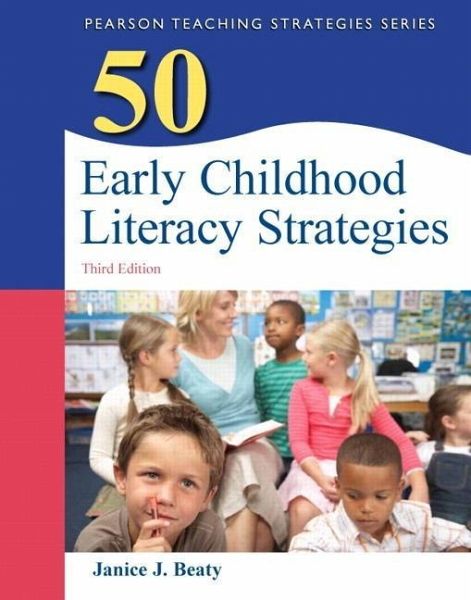
50 Early Childhood Literacy Strategies
Versandkostenfrei!
Versandfertig in über 4 Wochen
54,99 €
inkl. MwSt.

PAYBACK Punkte
27 °P sammeln!

Pre-service and in-serv Product Description
For a unique, easy-to-use and easy-to-understand guide to teaching literacy to three-, four-, and five-year-olds-and to meet the state and national mandates-readers can turn to this practical, up-to-date resource. It features 50 ready-to-implement strategies for using picture books and activities to help teach speaking/listening, writing, and reading skills at the early childhood level. 174 top rated picture books have been selected and described or listed within the strategies, making it an ideal resource for students, classroom teachers, and school volunteers alike.
Features + Benefits
Teachers and student interns get the latest information on early literacy in an easy-to-use, easy-to-understand format. The book's unique approach presents 50 brief yet concise chapters, each featuring a practical strategy for teaching three-, four-, and five-year-olds to read.
Readers see clearly when, how, and with which students to use each strategy and get the background information they need to create additional strategies to reinforce each lesson. A brief introduction to each strategy sets the stage and discusses the literacy concept associated with the strategy.
Readers learn quickly which picture books and activities to use with children, how to use them effectively, and how to ensure that children benefit from their use. Materials, content, and activities found in most early childhood classrooms are covered: blocks, chalk, crayons, computers, puppets, and more.
Teachers see how to work effectively and successfully with dual language learners. The book includes the latest information on working with dual language learners and vocabulary development.
The book's approach enables teachers the flexibility to select the strategies and activities most suited to their own teaching situations. Strategies are arranged in three parts for easy selection-Children's Speaking/Listening, Children's Writing, and Children's Reading-and the activities have been selected as models to help teachers develop their own ideas.
Backcover
Pre-service and in-service teachers alike get practical, up-to-date strategies and activities in this easy-to-use, easy-to-understand guide to teaching literacy to three-, four-, and five-year-olds. Readers discover the best picture books and activities to use with children, how to use them effectively, and how to ensure that children get the best benefits from their use. The book's unique approach presents the latest information on early literacy teaching strategies in 50 concise chapters divided into three sections: Children's Speaking/Listening, Children's Writing, and Children's Reading. This new edition includes the latest information on working with dual language learners, vocabulary development, and kindergarten reading, as well as practical applications of newly researched findings. Featured are:
· The latest information on early literacy in an easy-to-use, easy-to-understand format,
· Clear information on when, how, and with which students to use 50 practical strategies plus background information for creating additional strategies to reinforce each lesson,
· Guidance on what picture books and activities to use with children, how to use them effectively, and how to ensure that children can benefit from their use,
· Practical help for working effectively and successfully with dual language learners,
· New chapters on listening, vocabulary development, using dictation, working effectively with both writing and reading with dual language learners, and understanding kindergarten reading,
· Content updates include 69 new picture books, new activities in every chapter, 29 new children's artifacts, updated references, and a helpful Appendix of 26 appropriate web sites.
List of Children's Books
Part I Children's Speaking/Listening
1 Emergent Literacy
2 Speaking Words
3 Listening with Intent
4 Listening Center
5 Talk-rich Environment
6 Dramatic Play
7 Dual Language Learners
8 Phonological Awareness
9 Chanting, Singing
10 Vocabulary Development
11 Book Read-Alouds
12 Storytelling
13 Story Drama
14 Puppets
15 Assessing Speaking Progress
Part II Children's Writing
16 Emergent Writing
17 Writing Center
18 Environmental Print
19 Alphabet
20 Names
21 Taking Dictation
22 Caption Pictures
23 Easel Painting
24 Finger Painting
25 Chalk
26 Shared Writing
27 Dual Language Learners' Writing
28 Invented Spelling
29 Journals, Literature Logs
30 Messages
31 Block Building
32 Assessing Children's Writing
Part III Children's Reading
33 Emergent Reading
34 Book Center
35 Visual Literacy
36 Children Reading Independently
37 Computer Books
38 Shared Reading
39 Dual Language Readers
40 Big Books
41 Predictable Books
42 Song Storybooks
43 Book Characters
44 Sound Words
45 Syllables
46 Kindergarten Reading
47 Literacy Bags
48 Webs
49 Assessing Reading Progress
50 Words, Words, Words
Appendix A: Web Sites
For a unique, easy-to-use and easy-to-understand guide to teaching literacy to three-, four-, and five-year-olds-and to meet the state and national mandates-readers can turn to this practical, up-to-date resource. It features 50 ready-to-implement strategies for using picture books and activities to help teach speaking/listening, writing, and reading skills at the early childhood level. 174 top rated picture books have been selected and described or listed within the strategies, making it an ideal resource for students, classroom teachers, and school volunteers alike.
Features + Benefits
Teachers and student interns get the latest information on early literacy in an easy-to-use, easy-to-understand format. The book's unique approach presents 50 brief yet concise chapters, each featuring a practical strategy for teaching three-, four-, and five-year-olds to read.
Readers see clearly when, how, and with which students to use each strategy and get the background information they need to create additional strategies to reinforce each lesson. A brief introduction to each strategy sets the stage and discusses the literacy concept associated with the strategy.
Readers learn quickly which picture books and activities to use with children, how to use them effectively, and how to ensure that children benefit from their use. Materials, content, and activities found in most early childhood classrooms are covered: blocks, chalk, crayons, computers, puppets, and more.
Teachers see how to work effectively and successfully with dual language learners. The book includes the latest information on working with dual language learners and vocabulary development.
The book's approach enables teachers the flexibility to select the strategies and activities most suited to their own teaching situations. Strategies are arranged in three parts for easy selection-Children's Speaking/Listening, Children's Writing, and Children's Reading-and the activities have been selected as models to help teachers develop their own ideas.
Backcover
Pre-service and in-service teachers alike get practical, up-to-date strategies and activities in this easy-to-use, easy-to-understand guide to teaching literacy to three-, four-, and five-year-olds. Readers discover the best picture books and activities to use with children, how to use them effectively, and how to ensure that children get the best benefits from their use. The book's unique approach presents the latest information on early literacy teaching strategies in 50 concise chapters divided into three sections: Children's Speaking/Listening, Children's Writing, and Children's Reading. This new edition includes the latest information on working with dual language learners, vocabulary development, and kindergarten reading, as well as practical applications of newly researched findings. Featured are:
· The latest information on early literacy in an easy-to-use, easy-to-understand format,
· Clear information on when, how, and with which students to use 50 practical strategies plus background information for creating additional strategies to reinforce each lesson,
· Guidance on what picture books and activities to use with children, how to use them effectively, and how to ensure that children can benefit from their use,
· Practical help for working effectively and successfully with dual language learners,
· New chapters on listening, vocabulary development, using dictation, working effectively with both writing and reading with dual language learners, and understanding kindergarten reading,
· Content updates include 69 new picture books, new activities in every chapter, 29 new children's artifacts, updated references, and a helpful Appendix of 26 appropriate web sites.
List of Children's Books
Part I Children's Speaking/Listening
1 Emergent Literacy
2 Speaking Words
3 Listening with Intent
4 Listening Center
5 Talk-rich Environment
6 Dramatic Play
7 Dual Language Learners
8 Phonological Awareness
9 Chanting, Singing
10 Vocabulary Development
11 Book Read-Alouds
12 Storytelling
13 Story Drama
14 Puppets
15 Assessing Speaking Progress
Part II Children's Writing
16 Emergent Writing
17 Writing Center
18 Environmental Print
19 Alphabet
20 Names
21 Taking Dictation
22 Caption Pictures
23 Easel Painting
24 Finger Painting
25 Chalk
26 Shared Writing
27 Dual Language Learners' Writing
28 Invented Spelling
29 Journals, Literature Logs
30 Messages
31 Block Building
32 Assessing Children's Writing
Part III Children's Reading
33 Emergent Reading
34 Book Center
35 Visual Literacy
36 Children Reading Independently
37 Computer Books
38 Shared Reading
39 Dual Language Readers
40 Big Books
41 Predictable Books
42 Song Storybooks
43 Book Characters
44 Sound Words
45 Syllables
46 Kindergarten Reading
47 Literacy Bags
48 Webs
49 Assessing Reading Progress
50 Words, Words, Words
Appendix A: Web Sites
Pre-service and in-service teachers get practical, up-to-date strategies in an easy-to-use, easy-to-understand approach to teaching literacy to three-, four-, and five-year-old students as mandated by the state and national governments.
In this practical resource, teachers and student interns learn the best picture books and activities to use with children, how to use them effectively, and how to ensure that children best benefit from their use. They learn what to expect as young children's writing emerges from scribbles, to pictures, to real words, and they understand emergent literacy as it appears in preschool children and evolves into conventional literacy as it is taught in elementary school. The unique approach presents the latest information on early literacy teaching strategies in 50 concise chapters divided into three sections: Children's Speaking/Listening, Children's Writing, and Children's Reading, making specific topics easy to locate. This new edition includes the latest information on working with dual language learners, vocabulary development, and kindergarten reading, as well as practical applications of new researched findings.
In this practical resource, teachers and student interns learn the best picture books and activities to use with children, how to use them effectively, and how to ensure that children best benefit from their use. They learn what to expect as young children's writing emerges from scribbles, to pictures, to real words, and they understand emergent literacy as it appears in preschool children and evolves into conventional literacy as it is taught in elementary school. The unique approach presents the latest information on early literacy teaching strategies in 50 concise chapters divided into three sections: Children's Speaking/Listening, Children's Writing, and Children's Reading, making specific topics easy to locate. This new edition includes the latest information on working with dual language learners, vocabulary development, and kindergarten reading, as well as practical applications of new researched findings.
Andere Kunden interessierten sich für