Many lecturers long since recommend this undergraduate classic on
elementary particle theory. Using a lively, informal style, the
author strikes a balance between quantitative rigor and intuitive
understanding. The first chapter provides a detailed historical
introduction to the subject, while subsequent chapters offer a
consistent and modern presentation, covering the quark model,
Feynman diagrams, quantum electrodynamics, and gauge theories. A
clear introduction to the Feynman rules, using a simple model,
helps readers learn the calculational techniques without the
complications of spin. And an accessible treatment of QED shows how
to evaluate tree-level diagrams. The book contains an abundance of
worked examples and many end-of-chapter problems. This new edition
is rounded off by a solution manual.
Die Elementarteilchenphysik ist auf der ganzen Welt ein fester
Bestandteil im Curriculum des Physikstudiums. Umso wichtiger ist es
daher, dass auf diesem Gebiet bereits in den ersten Semestern ein
solides Wissensfundament gelegt wird - nicht zuletzt als
Vorbereitung auf die Themenbereiche Hochenergie- oder Kernphysik.
In diesen Band ist die gesamte Lehrerfahrung von David Griffiths
eingeflossen - eine begehrte "Ware", die in der
Neuauflage nun auch ein Lösungsmanual präsentiert, das die
zahlreichen Aufgaben und Fragen der Kapitelenden aufnimmt. Der
Autor versteht es, sich den Themen in einer lebendigen Sprache zu
nähern, die jedoch im Hinblick auf Präzision keine Kompromisse
eingeht. So eröffnet der Band den Zugang zu den Theorien ebenso wie
zu Modellen und Rechenoperationen. Das Werk wird von vielen
Lehrenden empfohlen und kann bereits jetzt als Klassiker innerhalb
der einführenden Werke zur Elementarteilchenphysik bezeichnet
werden.
----------------------------------------
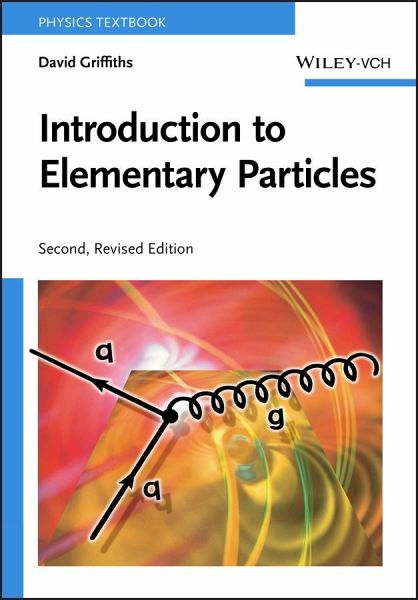
In the second, revised edition of a well-established textbook, the
author strikes a balance between quantitative rigor and intuitive
understanding, using a lively, informal style. The first chapter
provides a detailed historical introduction to the subject, while
subsequent chapters offer a quantitative presentation of the
Standard Model. A simplified introduction to the Feynman rules,
based on a "toy" model, helps readers learn the
calculational techniques without the complications of spin. It is
followed by accessible treatments of quantum electrodynamics, the
strong and weak interactions, and gauge theories. New chapters
address neutrino oscillations and prospects for physics beyond the
Standard Model. The book contains a number of worked examples and
many end-of-chapter problems. A complete solution manual is
available for instructors.
Ausstattung/Bilder: 2nd, rev. ed. Repr. 2009. XVI, 454 p. w. numerous ills.
Best.Nr. des Verlages: 1140601 000
Englisch
Abmessung: 244mm x 173mm x 25mm
Gewicht: 895g
ISBN-13: 9783527406012
ISBN-10: 3527406018
Best.Nr.: 14596391
A"I'd recommend this book to anyone in the field and anyone lecturing in it. It's wonderful. Reading any section will always yield insights, and you can't go wrong with Griffiths as a guide.A" ( Times Higher Education Supplement, December 2009) A"A clearly written textbook balancing intuitive understanding and mathematical rigour, emphasizing elementary particle theory.A" (Reviews, May 2009)
David Griffiths is Professor at the Reed College in Portland, OR. After obtaining his degree and PhD at Harvard, assignments included engagements at several renowned universities before joining Reed. There he focuses on Elementary Particle Theory as well as on Classical Electrodynamics and Quantum Mechanics. Besides numerous papers, he writes successful students texts, and serves in Editorial Boards of various physics journals.
Professor of Science, Knowlton Laboratory of Physics 126, Reed College, Department of Physics, 3203 SE Woodstock Blvd., Portland, OR 97202, USA, (503) 777-7252, ext. 7252, email: griffith@reed.edu.