
Andere Kunden interessierten sich auch für
 Weight loss drug29,99 €
 Weight Loss Surgery vs Diet & Exercise26,99 €
 Weight Loss Drugs29,99 €
 DASH Diet: The Ultimate Guide36,99 €
 Weight-loss surgery29,99 €
 Weight Loss25,99 €
 Natural Remedies for Weight Loss38,99 €
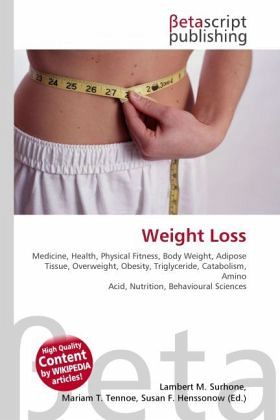
High Quality Content by WIKIPEDIA articles! Weight loss, in the context of medicine, health or physical fitness, is a reduction of the total body mass, due to a mean loss of fluid, body fat or adipose tissue and/or lean mass, namely bone mineral deposits, muscle, tendon and other connective tissue. It can occur unintentionally due to an underlying disease or can arise from a conscious effort to improve an actual or perceived overweight or obese state. Poor management of type 1 diabetes mellitus, also known as insulin-dependent diabetes mellitus (IDDM), leads to an excessive amount of glucose and an insufficient amount of insulin in the bloodstream. This triggers the release of triglycerides from adipose (fat) tissue and catabolism (breakdown) of amino acids in muscle tissue. This results in a loss of both fat and lean mass, leading to a significant reduction in total body weight. Note that untreated type 1 diabetes mellitus will usually not produce weight loss, as these patients get acutely ill before they would have had time to lose weight.