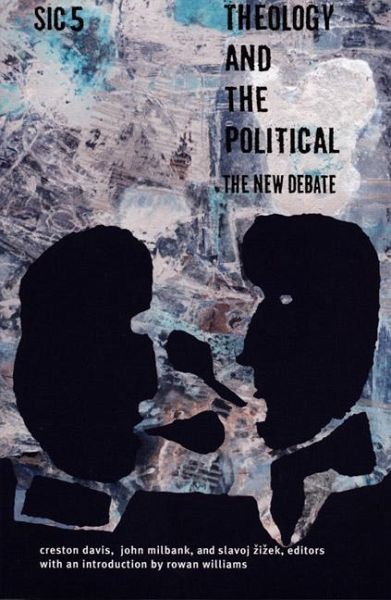
"Underlying all the very varied essays in this volume is a set of issues about how we understand human action. And what the essays have in common, I believe, is a conviction that the fundamental requirement of a politics worth the name is that we have an account of human action that decisively marks its distance from assumptions about action as the successful assertion of will. If there is no hinterland to human acting except the contest of private and momentary desire, meaningful action is successful action, an event in which a particular will has imprinted its agenda on the 'external' world.…mehr
"Underlying all the very varied essays in this volume is a set of issues about how we understand human action. And what the essays have in common, I believe, is a conviction that the fundamental requirement of a politics worth the name is that we have an account of human action that decisively marks its distance from assumptions about action as the successful assertion of will. If there is no hinterland to human acting except the contest of private and momentary desire, meaningful action is successful action, an event in which a particular will has imprinted its agenda on the 'external' world. Or, in plainer terms, meaning is power . . . and any discourse of justice is illusory."--Rowan Williams, Archbishop of Canterbury, from the introductionHinweis: Dieser Artikel kann nur an eine deutsche Lieferadresse ausgeliefert werden.
Creston Davis is a doctoral candidate in philosophical theology at the University of Virginia. John Milbank is a professor of religion, politics, and ethics at the University of Nottingham. His books include Being Reconciled: Ontology and Pardon and Theology and Social Theory: Beyond Secular Reason. Slavoj iek is a senior researcher at the Institute for Social Studies in Ljubljana, Slovenia. He is the author of Tarrying with the Negative: Kant, Hegel, and the Critique of Ideology, editor of Cogito and the Unconscious: Kant, Hegel, and the Critique of Ideology, and coeditor of Perversion and the Social Relation and Gaze and Voice as Love Objects, all also published by Duke University Press.
Inhaltsangabe
Acknowledgments xi Introduction / Rowan Williams 1 Part I. Revolution and Theological Difference Tragedy and Revolution / Terry Eagleton 7 Metanoia: The Theological Praxis of Revolution / Creston Davis and Patrick Aaron Riches 22 The “Thrilling Romance of Orthodoxy” / Slavoj Zizek 52 Nothing is Something Must Be: Lacan and Creation from No One / Conor Cunningham 72 Revelation and Revolution / Regina Mara Schwartz 102 Part 2. Ontology, Capital, and Kingdom Capital and Kingdom: An Eschatological Ontology / Philip Goodchild 127 Neither Servility nor Sovereignty: Between Metaphysics and Politics / William Desmond 153 Of Chrematology: Joyce and Money / Simon Chritchley and Tom McCarthy 183 Only Jesus Saves: Toward a Theopolitical Ontology of Judgment / Daniel M. Bell Jr. 200 Part 3. Infinite Desire and the Political Subject The Political Subject and Absolute Immanence / Antonio Negri 231 Rewriting the Ontological Script of Liberation: On the Question of Finding a New Kind of Political Subject / Kenneth Surin 240 Ecclesia: The Art of the Virtual / Anthony Baker and Rocco Gangle 267 The Univocalist Mode of Production / Catherine Pickstock 281 Part 4. Reenchanting the Political beyond Ontotheology The Unbearable Withness of Being: On the Essentialist Blind Spot of Anit-ontotheology / Mary-Jane Rubenstein 340 “To Cut Too Deeply and Not Enough”: Violence and the Incorporeal / Elanor Kaufman 350 The Two Sources of the “Theological Machine:: Jacques Derrida and Henri Bergson on Religion, Technicity, War, and Terror / Hent de Vries 366 Part 5. Theological Materialism Materialism and Transcendence / John Milbank 393 Truth and Peace: Theology and the Body Politic in Augustine and Hobbes / Karl Hefty 427 The Politics of the Eye: Toward a Theological Materialism / Phillip Blond 439 Notes on Contributors 463 Index 467
Acknowledgments xi Introduction / Rowan Williams 1 Part I. Revolution and Theological Difference Tragedy and Revolution / Terry Eagleton 7 Metanoia: The Theological Praxis of Revolution / Creston Davis and Patrick Aaron Riches 22 The “Thrilling Romance of Orthodoxy” / Slavoj Zizek 52 Nothing is Something Must Be: Lacan and Creation from No One / Conor Cunningham 72 Revelation and Revolution / Regina Mara Schwartz 102 Part 2. Ontology, Capital, and Kingdom Capital and Kingdom: An Eschatological Ontology / Philip Goodchild 127 Neither Servility nor Sovereignty: Between Metaphysics and Politics / William Desmond 153 Of Chrematology: Joyce and Money / Simon Chritchley and Tom McCarthy 183 Only Jesus Saves: Toward a Theopolitical Ontology of Judgment / Daniel M. Bell Jr. 200 Part 3. Infinite Desire and the Political Subject The Political Subject and Absolute Immanence / Antonio Negri 231 Rewriting the Ontological Script of Liberation: On the Question of Finding a New Kind of Political Subject / Kenneth Surin 240 Ecclesia: The Art of the Virtual / Anthony Baker and Rocco Gangle 267 The Univocalist Mode of Production / Catherine Pickstock 281 Part 4. Reenchanting the Political beyond Ontotheology The Unbearable Withness of Being: On the Essentialist Blind Spot of Anit-ontotheology / Mary-Jane Rubenstein 340 “To Cut Too Deeply and Not Enough”: Violence and the Incorporeal / Elanor Kaufman 350 The Two Sources of the “Theological Machine:: Jacques Derrida and Henri Bergson on Religion, Technicity, War, and Terror / Hent de Vries 366 Part 5. Theological Materialism Materialism and Transcendence / John Milbank 393 Truth and Peace: Theology and the Body Politic in Augustine and Hobbes / Karl Hefty 427 The Politics of the Eye: Toward a Theological Materialism / Phillip Blond 439 Notes on Contributors 463 Index 467
Es gelten unsere Allgemeinen Geschäftsbedingungen: www.buecher.de/agb
Impressum
www.buecher.de ist ein Shop der buecher.de GmbH & Co. KG Bürgermeister-Wegele-Str. 12, 86167 Augsburg Amtsgericht Augsburg HRA 13309