Andere Kunden interessierten sich auch für
 The Origins of Hereditary Social Stratification118,99 €
 Rank and insignia of the Tanzanian Armed Forces25,99 €
 Royal Navy Ratings Rank Insignia22,99 €
") Wing Commander (Rank)29,99 €
Wing Commander (Rank)29,99 € Royal Navy Officer Rank Insignia22,99 €
 United States Army Officer Rank Insignia29,99 €
") Specialist (rank)22,99 €
Specialist (rank)22,99 €






Describes a range of methods used by archaeologists to infer ranking from archaeological data.
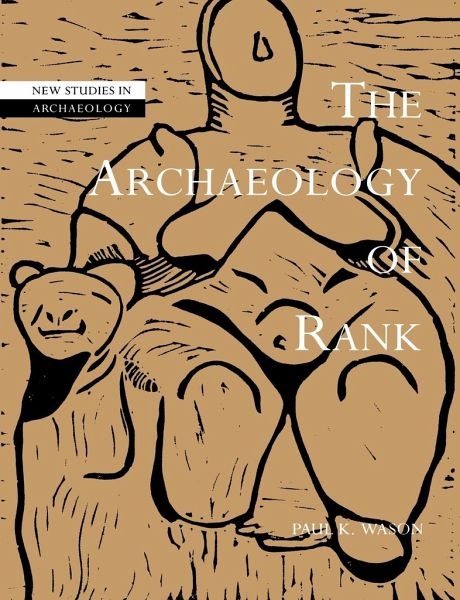
Social archaeology is concerned with how one might use the archaeological record of the present to elucidate how social interactions were ordered in a past society. This requires a meaningful model of society, considerable archaeological data, and a reliable connection between them. A major goal of this book is to improve our understanding of one aspect of social archaeology, the inference of status hierarchy. The first section covers what is involved in social inference, and presents ideas on how it may be done reliably. In the following section, the typological models of Elman Service and Morton Fried are used to clarify certain aspects of ranking. The final section draws together a number of insights concerning the recognition of status inequality. These approaches are given systematic arrangement and evaluated in light of the model of social inference. This arrangement clarifies how they relate to each other, making it easier to see how they may be applied in varied real contexts, and stimulates new ideas for more correlations of ranking.
Table of content:
1. The present study of past society; 2. Social theory and social life; 3. Inequality and social life: a working model; 4. Mortuary data as evidence of ranking; 5. Mortuary data as evidence of ranking; 6. The form and distribution of artifacts; 7. Status, settlements, and structures; 8. Catal Hüyük: a ranked Neolithic town in Anatolia?; Notes; References; Index.
Hinweis: Dieser Artikel kann nur an eine deutsche Lieferadresse ausgeliefert werden.
Social archaeology is concerned with how one might use the archaeological record of the present to elucidate how social interactions were ordered in a past society. This requires a meaningful model of society, considerable archaeological data, and a reliable connection between them. A major goal of this book is to improve our understanding of one aspect of social archaeology, the inference of status hierarchy. The first section covers what is involved in social inference, and presents ideas on how it may be done reliably. In the following section, the typological models of Elman Service and Morton Fried are used to clarify certain aspects of ranking. The final section draws together a number of insights concerning the recognition of status inequality. These approaches are given systematic arrangement and evaluated in light of the model of social inference. This arrangement clarifies how they relate to each other, making it easier to see how they may be applied in varied real contexts, and stimulates new ideas for more correlations of ranking.
Table of content:
1. The present study of past society; 2. Social theory and social life; 3. Inequality and social life: a working model; 4. Mortuary data as evidence of ranking; 5. Mortuary data as evidence of ranking; 6. The form and distribution of artifacts; 7. Status, settlements, and structures; 8. Catal Hüyük: a ranked Neolithic town in Anatolia?; Notes; References; Index.
Hinweis: Dieser Artikel kann nur an eine deutsche Lieferadresse ausgeliefert werden.