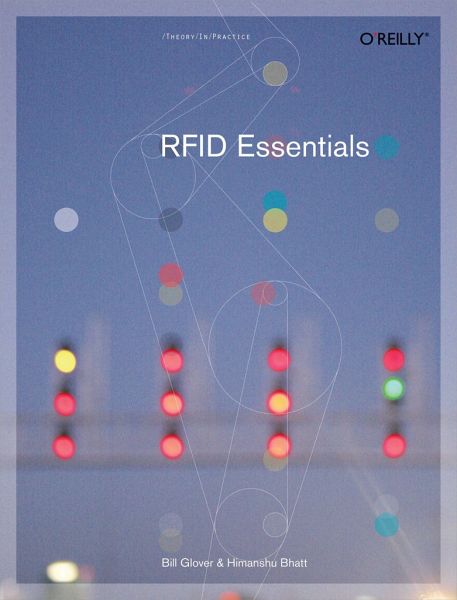
Radio Frequency Identification (RFID) is rapidly changing the way business is being conducted. From Walmart, to the Department of Defense, the benefits of RFID are quickly being realized. Although the software, integration, and data processing side of RFID still present a challenge in many organizations. If you are a developer or an architect charged with developing an RFID system, this book is for you. Drawing on extensive experience, the authors provide you with essential information onthis emerging space. In the book you will find information on: - Tags and Tag Protocols including…mehr
Radio Frequency Identification (RFID) is rapidly changing the way business is being conducted. From Walmart, to the Department of Defense, the benefits of RFID are quickly being realized. Although the software, integration, and data processing side of RFID still present a challenge in many organizations. If you are a developer or an architect charged with developing an RFID system, this book is for you. Drawing on extensive experience, the authors provide you with essential information onthis emerging space. In the book you will find information on: - Tags and Tag Protocols including Electronic Product Code (EPC) - Readers and Reader Protocols - RFID Middleware - Security and Privacy - Managing RFID Devices - Architecture With the knowledge you gain in these pages you will possess the information and understanding you need to start designing, building or integrating with RFID systems.Hinweis: Dieser Artikel kann nur an eine deutsche Lieferadresse ausgeliefert werden.
Bill Glover has been writing software since 1981 and has worked as a programmer, lead developer, or architect on systems of all sizes, from small, automated systems controlling dams and feedmills up to a complete redesign and reimplementation of one of the world's busiest travel web sites. Bill first worked with RFID in 1995, tracking individual cattle using ear tags. He is currently a Senior Java Architect with Sun Microsystems, Inc. and works with Sun's RFID consulting practice and RFID Test Center. Himanshu V Bhatt leads the worldwide solution development and go to market efforts for Supply Chain & Logistics solutions for IBM, as well as leading the incubation for Sensor and Actuator solutions in emerging markets such as India. Himanshu has spoken at conferences such as JavaWorld, RFIDWorld, RFID Journal Live, and the National Retail Federation and with over 18 years of experience in building enterprise software architectures and helping companies draw insights from their IT to help drive business transformations, Himanshu is an expert in Service Oriented Architecture, Business Process Modeling and Web Services Security. Himanshu has a B.S. in Electronics from Mumbai University, an M.S. in Computer Science from Michigan State University and an MBA in Finance and International Business from the University of Texas at Dallas. Himanshu is a CISSP.
Inhaltsangabe
Praise for RFID Essentials Preface Chapter One: An Introduction to RFID Chapter Two: RFID Architecture Chapter Three: Tags Chapter Four: Tag Protocols Chapter Five: Readers and Printers Chapter Six: Reader Protocols Chapter Seven: RFID Middleware Chapter Eight: RFID Information Service Chapter Nine: Manageability Chapter Ten: Privacy and Security Chapter Eleven: The Future Appendix A: EPC Identity Encodings Appendix B: References Glossary Colophon
Praise for RFID Essentials Preface Chapter One: An Introduction to RFID Chapter Two: RFID Architecture Chapter Three: Tags Chapter Four: Tag Protocols Chapter Five: Readers and Printers Chapter Six: Reader Protocols Chapter Seven: RFID Middleware Chapter Eight: RFID Information Service Chapter Nine: Manageability Chapter Ten: Privacy and Security Chapter Eleven: The Future Appendix A: EPC Identity Encodings Appendix B: References Glossary Colophon
Es gelten unsere Allgemeinen Geschäftsbedingungen: www.buecher.de/agb
Impressum
www.buecher.de ist ein Shop der buecher.de GmbH & Co. KG Bürgermeister-Wegele-Str. 12, 86167 Augsburg Amtsgericht Augsburg HRA 13309