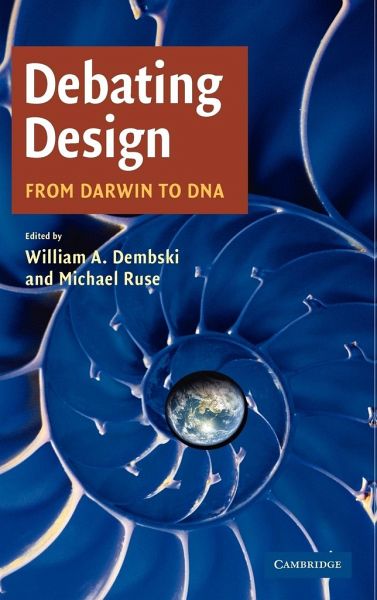
Introduction: General introduction William Dembski and Michael Ruse
The argument from design: a brief history Michael Ruse
Who's afraid of ID? A survey of the intelligent design movement Angus Menuge
Part I. Darwinism: 1. Design with designer: Darwin's greatest discovery Francisco Ayala
2. The flagellum unspun: the collapse of 'irreducible complexity' Kenneth Miller
3. The design argument Elliott Sober
4. DNA by design? Stephen Meyer and the return of the god hypothesis Robert Pennock
Part II. Complex Self-Organization: 5. Prolegomenon to a general biology Stuart Kauffman
6. Darwinism, design and complex systems dynamics David Depew and Bruce Weber
7. Emergent complexity, teleology, and the arrow of time Paul Davies
8. The emergence of biological value James Barham
Part III. Theistic Evolution: 9. Darwin, design and divine providence John Haught
10. The inbuilt potentiality of creation John Polkinghorne
11. Theistic evolution Keith Ward
12. Intelligent design: some geological, historical and theological questions Michael Roberts
13. The argument from laws of nature reassessed Richard Swinburne
Part IV. Intelligent Design: 14. The logical underpinnings of intelligent design William Dembski
15. Information, entropy and the origin of life Walter Bradley
16. Irreducible complexity: obstacle to Darwinian evolution Michael Behe
17. The Cambrian information explosion: evidence for intelligent design Stephen Meyer.
Introduction: General introduction William Dembski and Michael Ruse; The argument from design: a brief history Michael Ruse; Who's afraid of ID? A survey of the intelligent design movement Angus Menuge; Part I. Darwinism: 1. Design with designer: Darwin's greatest discovery Francisco Ayala; 2. The flagellum unspun: the collapse of 'irreducible complexity' Kenneth Miller; 3. The design argument Elliott Sober; 4. DNA by design? Stephen Meyer and the return of the god hypothesis Robert Pennock; Part II. Complex Self-Organization: 5. Prolegomenon to a general biology Stuart Kauffman; 6. Darwinism, design and complex systems dynamics David Depew and Bruce Weber; 7. Emergent complexity, teleology, and the arrow of time Paul Davies; 8. The emergence of biological value James Barham; Part III. Theistic Evolution: 9. Darwin, design and divine providence John Haught; 10. The inbuilt potentiality of creation John Polkinghorne; 11. Theistic evolution Keith Ward; 12. Intelligent design: some geological, historical and theological questions Michael Roberts; 13. The argument from laws of nature reassessed Richard Swinburne; Part IV. Intelligent Design: 14. The logical underpinnings of intelligent design William Dembski; 15. Information, entropy and the origin of life Walter Bradley; 16. Irreducible complexity: obstacle to Darwinian evolution Michael Behe; 17. The Cambrian information explosion: evidence for intelligent design Stephen Meyer.