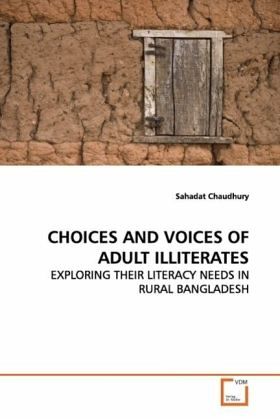
CHOICES AND VOICES OF ADULT ILLITERATES
EXPLORING THEIR LITERACY NEEDS IN RURAL BANGLADESH
Versandkostenfrei!
Versandfertig in 6-10 Tagen
45,99 €
inkl. MwSt.

PAYBACK Punkte
23 °P sammeln!

Unlike many studies that draw mostly on providers accounts, this book explored the voices and choicesof the beneficiaries of literacy programs. It is agrassroots view of how they perceive the importanceof literacy in their lived life. One of the keyobjectives of this study was to generate a betterunderstanding of the complex needs for adult literacyin rural Bangladesh. The analysis of data suggestedthat rural adults tended to identify themselves aseducated or uneducated instead of as literate orilliterate; there was hardly any difference inperspective between neo-literates and illiterates;adul...
Unlike many studies that draw mostly on providers
accounts, this book explored the voices and choices
of the beneficiaries of literacy programs. It is a
grassroots view of how they perceive the importance
of literacy in their lived life. One of the key
objectives of this study was to generate a better
understanding of the complex needs for adult literacy
in rural Bangladesh. The analysis of data suggested
that rural adults tended to identify themselves as
educated or uneducated instead of as literate or
illiterate; there was hardly any difference in
perspective between neo-literates and illiterates;
adults engaged in regular rural occupations like
selling labor or farming are less likely to feel
motivated to pursue literacy; older male adults
preferred to spend their time on religious pursuits
instead of on literacy; and older women attached
higher priority to skills training as than did
younger women. Based on his research findings, the
author argued for developing some common ground. Such
middle ground, he asserted, could foster increased
understanding and cooperation among all actors, and
contribute to the development of more useful literacy
programs for rural adults.
accounts, this book explored the voices and choices
of the beneficiaries of literacy programs. It is a
grassroots view of how they perceive the importance
of literacy in their lived life. One of the key
objectives of this study was to generate a better
understanding of the complex needs for adult literacy
in rural Bangladesh. The analysis of data suggested
that rural adults tended to identify themselves as
educated or uneducated instead of as literate or
illiterate; there was hardly any difference in
perspective between neo-literates and illiterates;
adults engaged in regular rural occupations like
selling labor or farming are less likely to feel
motivated to pursue literacy; older male adults
preferred to spend their time on religious pursuits
instead of on literacy; and older women attached
higher priority to skills training as than did
younger women. Based on his research findings, the
author argued for developing some common ground. Such
middle ground, he asserted, could foster increased
understanding and cooperation among all actors, and
contribute to the development of more useful literacy
programs for rural adults.
Andere Kunden interessierten sich für